
More Than Flowers This May: A Daughter's Mother's Day Guide
Grandma's generation thought flowers were "pretty." Mum's generation thought flowers were "wasteful." So when Melbourne's May rolls around and every shopping-centre window fills with Mother's Day posters, a lot of us — the daughters — realise we've never actually seen our mum holding flowers.
It's a strange thing to notice. The women who raised us in this city, who navigated three languages at the Centrelink counter and ran small businesses out of strip-mall shopfronts and packed their daughters' lunches into Tupperware every morning for fifteen years — those women have almost no photographs of themselves looking at something beautiful that was given to them. There are photographs of them at weddings. There are photographs of them posing stiffly with grandchildren. There are no photographs of them holding carnations.
This May, I'd like to try to change that.
Our mothers were never taught to buy flowers for themselves
They grew up in small towns in the 80s. Saving was a virtue. Flowers were a luxury.
They later crossed oceans to Australia and spent half their lives boiling soup in kitchens in Box Hill, Doncaster, Glen Waverley. Worked three jobs to put their daughters through school. Learned English, learned to drive, learned to nod at the Woolworths cashier.
No one taught them how to receive flowers.
So this May, if you're planning to give her a bouquet for the first time, be ready for her to say: "Such a waste of money."
Smile. Hand them over anyway.
"It's your turn this year."
This is more than a bouquet question — it's the quiet rebuilding of a ritual across a migrant generation. H Flowers has been an independent Melbourne florist for six years. Our owner drives to Melbourne's wholesale flower market every Monday morning — no distributors, no wholesalers — and checks petal thickness and stem rigidity by hand before anything goes in the basket.
A bouquet meant for Mum deserves to be handled that way.
The kitchen on Sunday morning

Picture this, because it's what most of us are about to walk into.
Your mother has her back to you at the sink. She heard the door but didn't turn — she's still finishing the last dishes from breakfast. The radio is on: Hong Kong Cantopop, or a Mandarin talkback show, or the ABC classical station she never changed from your father's setting. You take three steps into the kitchen holding a wrapped bouquet, kraft paper crackling against your jumper, and you feel — at thirty-two, or forty-one, or fifty-six — exactly the way you felt at fourteen, standing in this same kitchen with a school report card you weren't sure how she'd receive.
She turns. She sees the flowers. Her face does a small thing that's hard to describe — relief and embarrassment and wanting-to-scold-you and wanting-to-cry all at once, passing across her features in about two seconds before settling into the brisk practical expression she uses for everything she doesn't have a script for.
"Aiya, so expensive."
She says this every year regardless of what you've bought her.
You put the bouquet on the bench. She'll move it to a jug later, at an angle that isn't quite right, and she'll tell three separate neighbours about it over the next week.
This is the scene. It doesn't change much across families. It doesn't need to.
The mothers who aren't here with us this May
A lot of Chinese-Australian daughters have mothers still back home — in Shenzhen, Taipei, Shanghai, Beijing.
May 10 is a Sunday. You're in Melbourne. She's on the other side of a phone screen, eating dinner across twelve time zones.
You can't hand her flowers.
So we do it the other way — send them to her Melbourne friend's place, or to wherever she's landing next week for a visit, or to sit beside the WeChat message she'll open tomorrow.
If she happens to be in Melbourne: order by noon, same-day delivery to her door. Melbourne metro, covered — see our Shipping Policy for the exact list.
What H Flowers actually has in May
Late autumn in Melbourne smells like cold eucalyptus. We don't claim to be seasonal in the botanical-calendar sense — carnations and roses come from greenhouses and equatorial fields that run year-round, which is part of what makes them reliable for Mother's Day. What is seasonal is local foliage: eucalyptus, wheat, a touch of Protea.
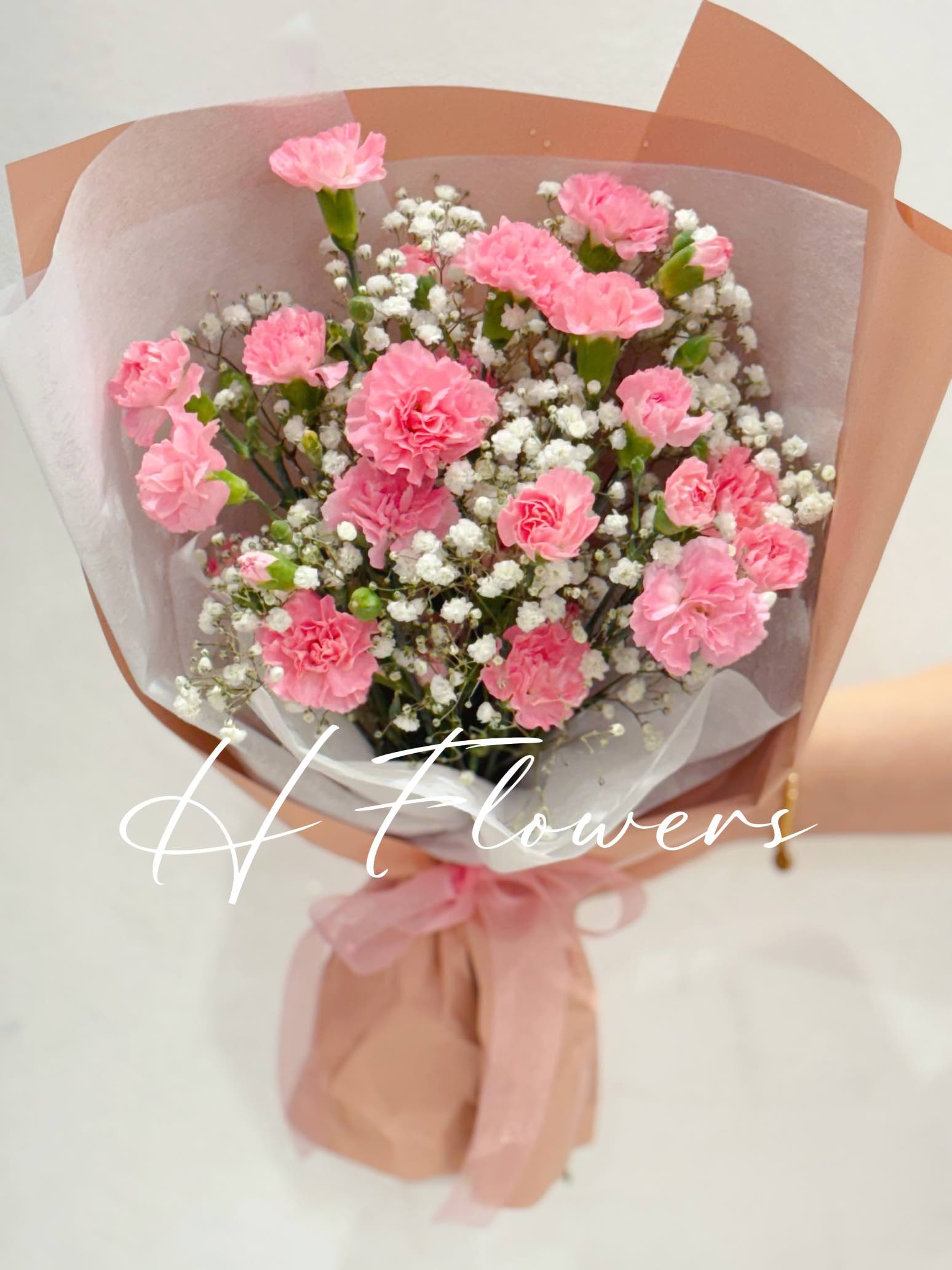
- Carnations — the heart of our Mother's Day range. The carnation has been the symbolic Mother's Day flower in the Western tradition since Anna Jarvis organised the first American Mother's Day memorial service in 1908, when 500 white carnations were distributed in her mother's honour. A hundred years later that symbolism is softer but still underneath why older mothers light up when they see a carnation bouquet. Pink, champagne, snow-white — we carry every register.
- Ecuador Roses — thick-stemmed, large-headed, grown in the high-altitude fields around Quito and Cayambe. For a mother who associates flowers with formality, a soft-pink or cream Ecuador rose bouquet hits the register precisely.
- Lilies and orchids — our lily-carnation combinations and our Singapore Orchids Box sit at the quiet, elegant end of the range. Lilies in particular carry strong "dignified gift" reading across East Asian and Anglo-Celtic families alike.
- Mixed floral arrangements — for mothers whose taste is simply "pick what's beautiful." Our designers build around a colour story rather than a single headline flower.
- The supporting cast: eucalyptus, wheat, a touch of Protea — the warm-autumn textures that anchor a May bouquet to this city in this month.
Our owner hand-picks every stem at Melbourne's wholesale flower market before dawn on Mondays. Petal density, stem rigidity, colour. Nothing sits in a distributor's cooler for three days before it reaches you.
Which flower for which mother
Not every bouquet fits every mother. Over six years of running two stores, we've started noticing patterns.
For the gentle, soft-spoken mother — the one who spent the 1990s apologising to the dry-cleaner when he made the mistake — go with pink carnations and a few cream roses, eucalyptus trailing at the edges. Low contrast, soft edges, nothing that demands attention. She'll notice that the bouquet doesn't shout at her, and she'll relax around it the way she relaxes around anything that doesn't ask her to perform.
For the tough, practical mother — the one who ran the shop while your father was on dialysis — choose deep-red or burgundy carnations with wheat and a single dried banksia pod. The arrangement reads as structural rather than pretty. She'll interpret it as serious, which is the register she respects. Don't try to soften her with pastel pink; she'll find it patronising.
For the restrained, private mother — the one who still writes thank-you cards and doesn't understand emoji — a near-monochrome arrangement: white carnations, white Ecuador roses, sage eucalyptus, a bundle of wheat. The absence of colour reads, to her generation, as taste. She'll put it somewhere visible and never comment directly on it; that's how you'll know it landed.
For the warm, expressive mother — the one who hugs your friends when they come over and cries at drama series — a multi-tone carnation medley with a Singapore orchid accent and trailing eucalyptus. More drama, more permission to be emotional. She'll photograph it for WeChat moments. She wants you to see her enjoying it.
We don't enforce these as rules in store. They're patterns we've noticed when the daughter stands at the counter and starts by saying, "My mum is the kind of person who…" — and we build from there.
Beyond the flowers — a sentence, a meal, an afternoon
Flowers don't speak for themselves. A few small ways to help them along:
- A handwritten card. In Chinese, in English, half-and-half — Mum will read it. The note is the part she'll keep in the drawer long after the bouquet is done.
- A phone call. Ten minutes is enough.
- A meal. On May 10, if you're in Melbourne, take her to the Chinese restaurant she never gets tired of.
- A restrained bouquet. Our florists at Melbourne Central have prepared quietly-beautiful arrangements for older mothers — creams, soft pinks, muted greens. For this generation, restraint is more tender than brightness.
If you only manage one of these this year, do that one.
If your mother isn't the kind to receive flowers

Some mothers — maybe most migrant mothers of a certain generation — have built a lifelong reflex against "being served." She will not sit down while guests are in the house. She will not let you wash a single dish when you visit. She has a complicated relationship with anything that feels like fuss over her.
If this is your mother, the bouquet itself is the easy part. The harder part is how you deliver it.
Some things that have worked for our regulars.
Don't hand it to her at the door. That forces an immediate response she's not ready to give. Walk in, put it somewhere she'll come across later — on the dining table where she chops vegetables, on the counter beside the kettle. Let her discover it on her own terms.
Cut the stems for her. The act of trimming the ends at an angle and arranging them in her favourite jug does something specific: it removes the obligation to do the work, which for her generation was always part of why flowers felt like a burden.
Take her out for coffee while the flowers settle in. By the time you come back, she's had thirty minutes alone with them without needing to perform a reaction. She'll sit down with her tea that evening and look at them properly for the first time.
Don't ask her if she likes them. The answer she wants to give and the answer she thinks she's supposed to give will be in conflict, and you'll embarrass her. Just leave it. She'll bring them up herself, three days later, in the middle of an unrelated phone call about your cousin's wedding.
This isn't a workaround for a reluctant mother. It's a respect for a generation that was trained — by war, by migration, by scarcity — to deflect affection rather than absorb it. The flowers aren't for the moment of receiving. They're for the ten days afterwards — carnations last that long easily — when she walks past them on the way to the kettle and something softens slightly in her chest.
Getting flowers into her hands — Box Hill Central or Melbourne Central CBD
Both H Flowers stores run the same delivery line:
- Box Hill Central (SP035/1 Main Street, VIC 3128) — the heart of Melbourne's Chinese community. The easier drive if your mum is in Doncaster, Clayton, Balwyn or Glen Waverley.
- Melbourne Central CBD (GD014A/211 La Trobe Street) — right opposite the train station. CBD lunchtime pickup, on the way home.
Same-day delivery across Melbourne metro: order by 12pm, arrives the same day.
Between 12pm and 3pm, we'll do our best — and usually we make it. After 3pm on Saturday or Sunday, we'll be honest with you: more likely next-day. We'd rather be upfront than over-promise.
Phone: Box Hill 03 9191 3999 / Melbourne Central 03 9191 6636.
One more bouquet — keep it for yourself
One small suggestion to close on.
If you're a mother yourself, buy yourself a bouquet too this year.
If you're not yet, but you've been quietly mothering someone — a grandmother, a younger sibling, a partner, the elderly cat going to the vet in two weeks — keep one for yourself anyway.
It's not retail therapy. It's a small, serious acknowledgment that she deserves to be taken seriously, by herself too.
Melbourne in May — cold wind outside, water vapour rising from carnations on the dining table.
That's the whole answer.
Related: 2026 Mother's Day Collection · Ecuador Roses · Shipping Policy · About H Flowers
Read more
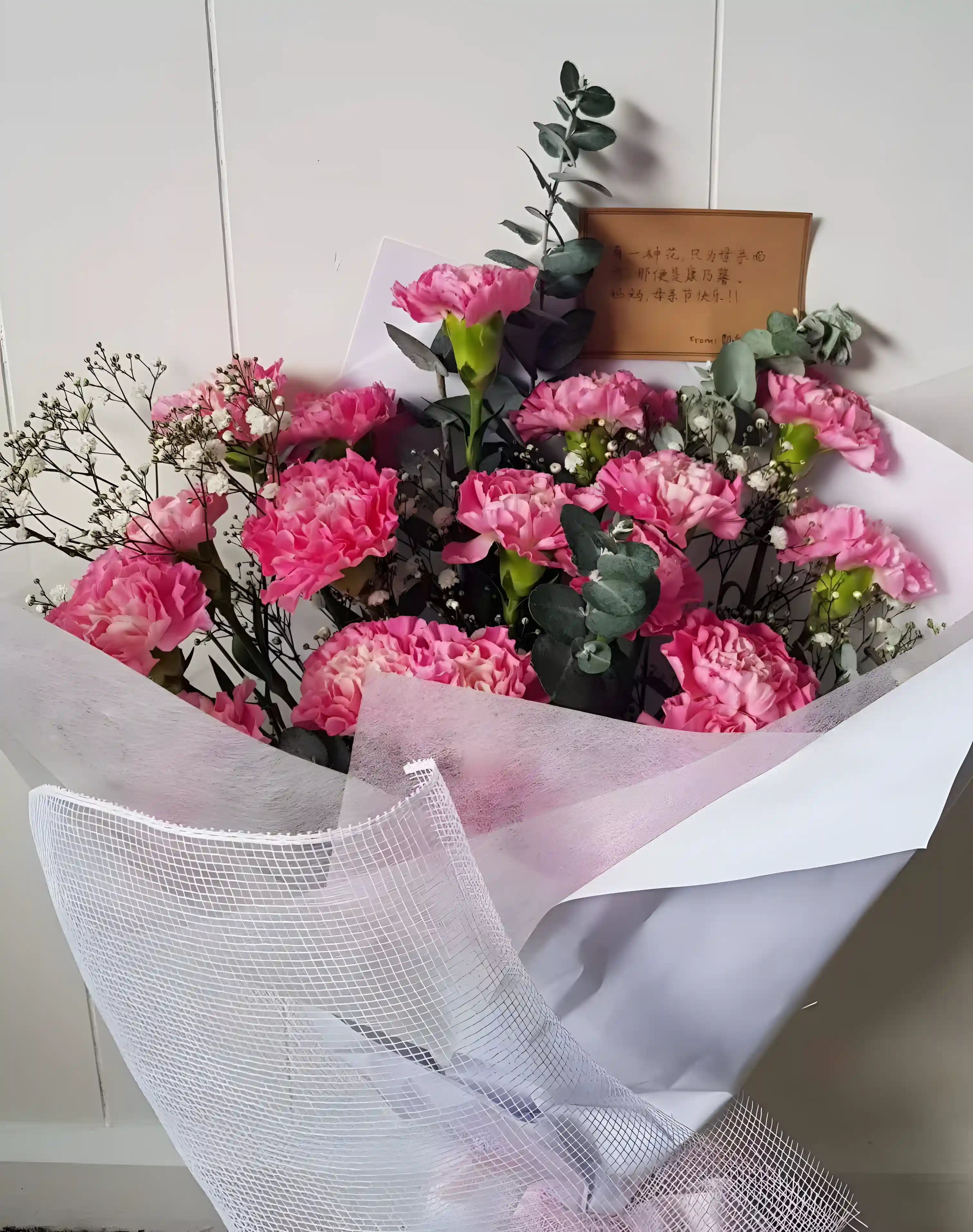
The Mother's Day Flower Guide Melbourne Actually Needs
For anyone who wants to get Mother's Day flowers right without making a weekend project out of it. No hype, no "last X bouquets left", no petrol-station roses. Why carnations are the original Mothe...
Read more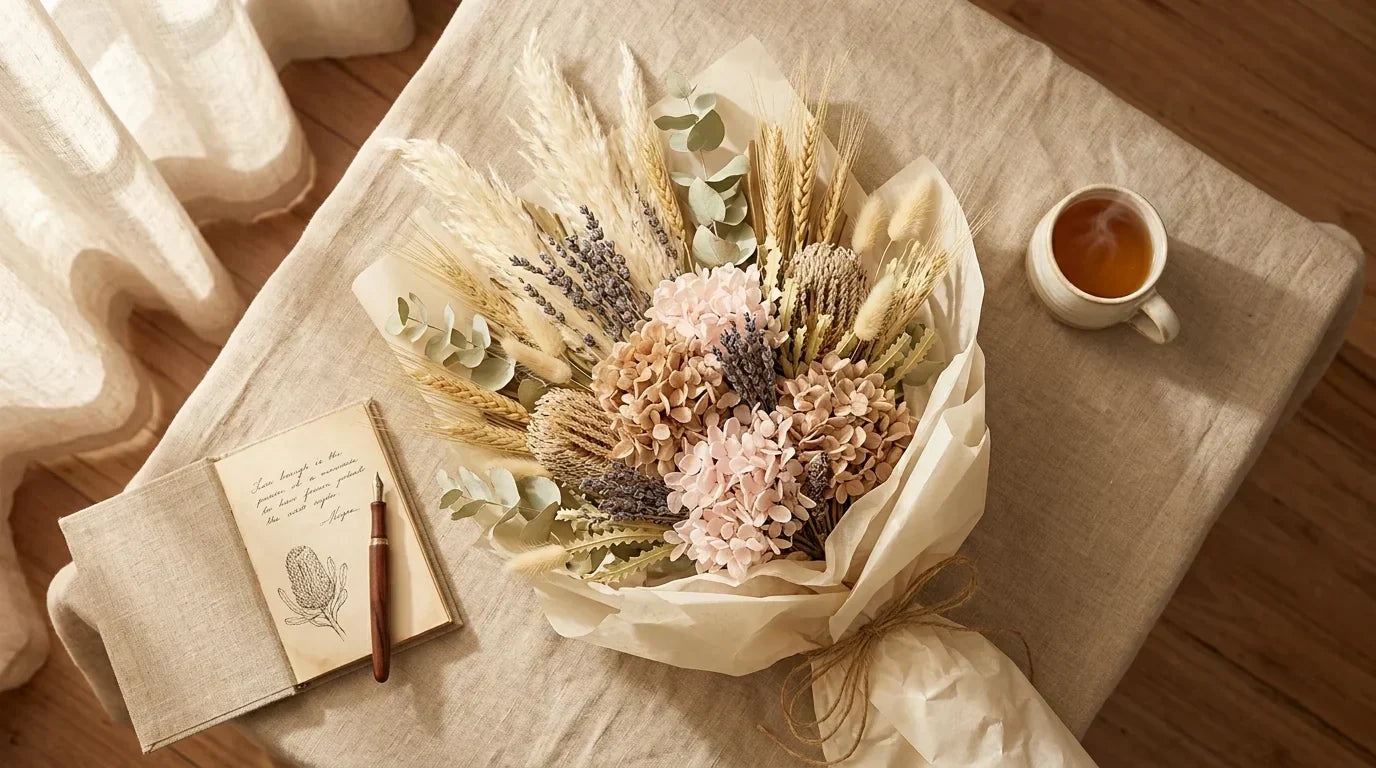
Dried Flowers: Melbourne's Quietest Winter Luxury
Once winter properly arrives in Melbourne, the cut roses on your dining table tend to start drooping by day five.You change the water. You add a sugar cube. You snip the stems again and again. None...
Read more