
Who in your wedding needs flowers
The most common mistake is not the budget - it is forgetting someone. Work down this list once and the order is complete.
Carried
| Who | Usually | Notes |
|---|---|---|
| Bride | 1 bouquet | Decide this first - everything else takes its cue from it |
| Bridesmaids | 1 each | Smaller than the bride's, and they need not be identical |
| Maid of honour | 1 | Sometimes larger, or a different accent, to mark the role |
| Flower girl | 1 posy or basket | Scale it to the child - a full posy is heavy for a five-year-old |
| Toss bouquet | 1, optional | Only if you want to keep the real one intact |
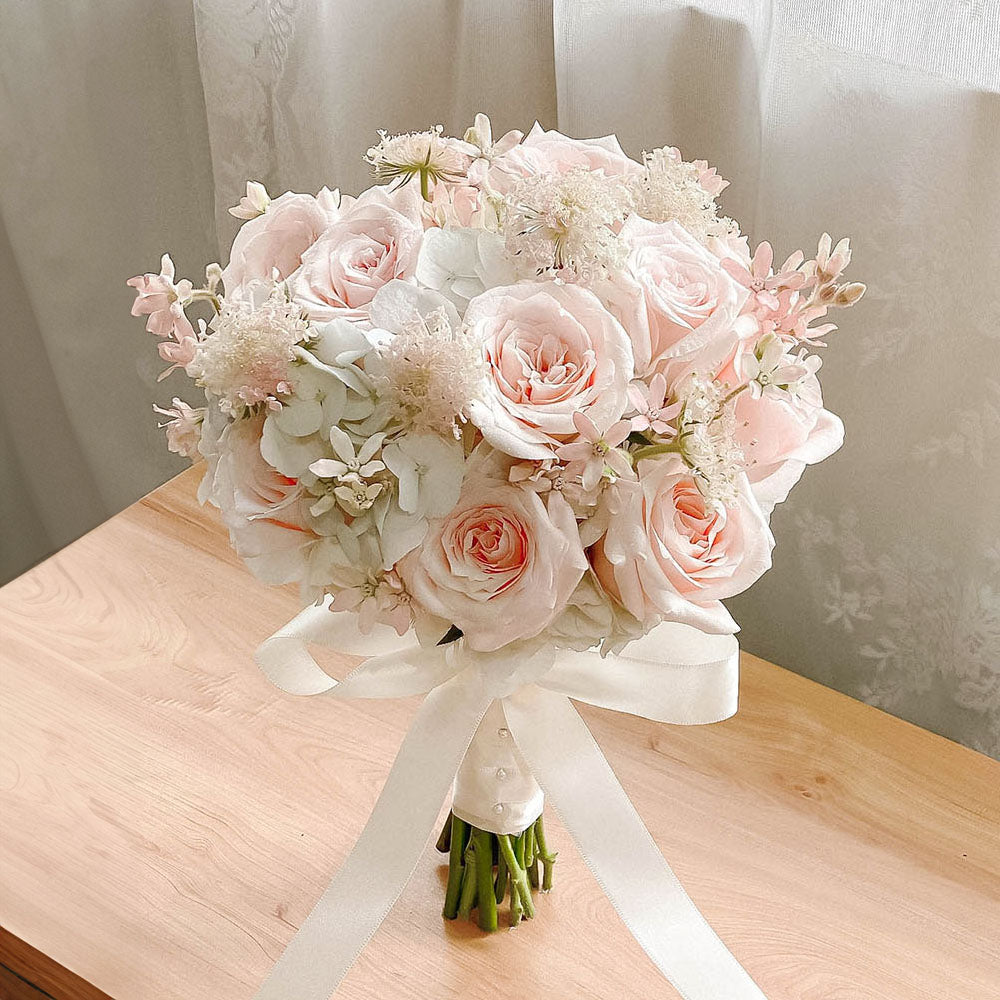
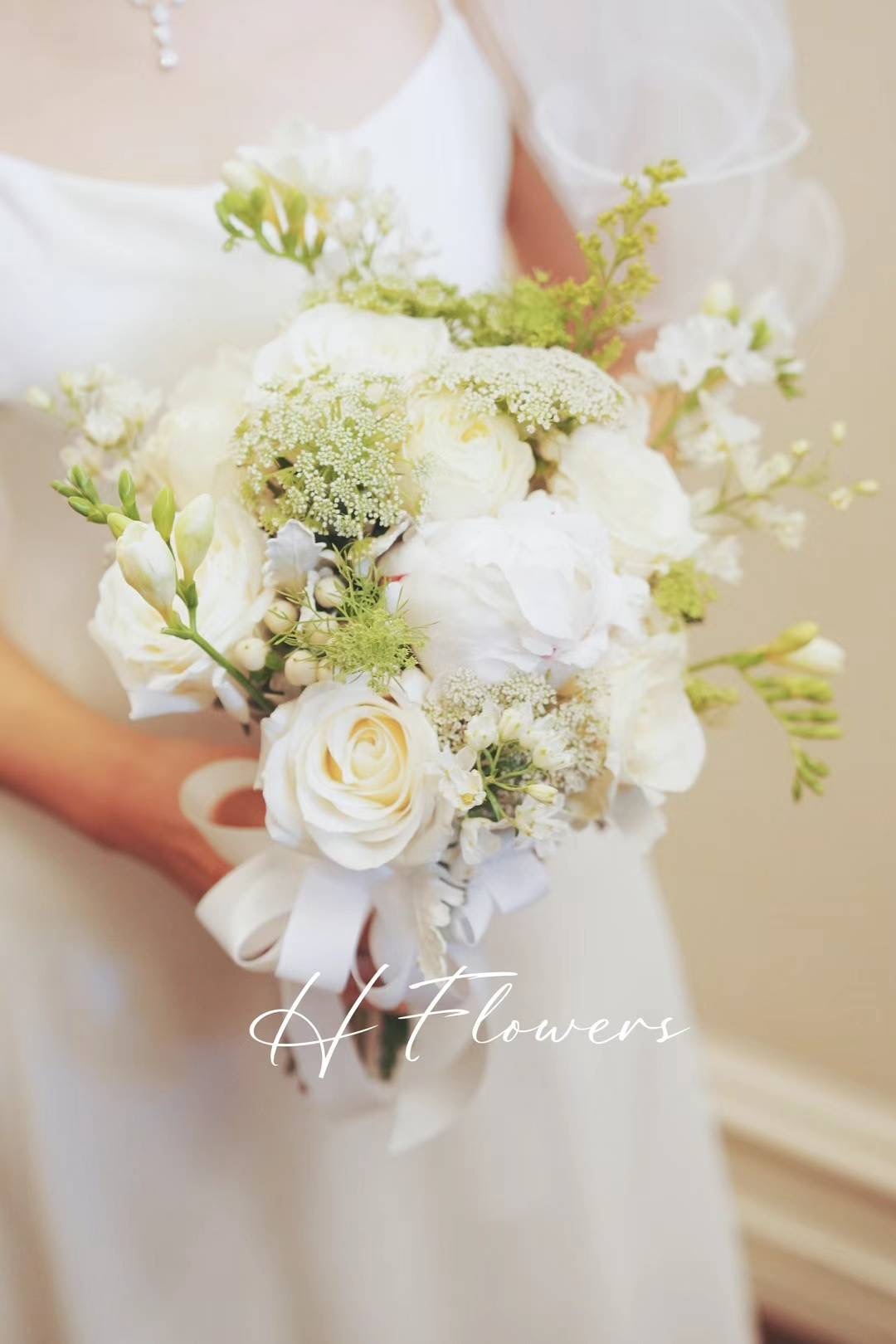
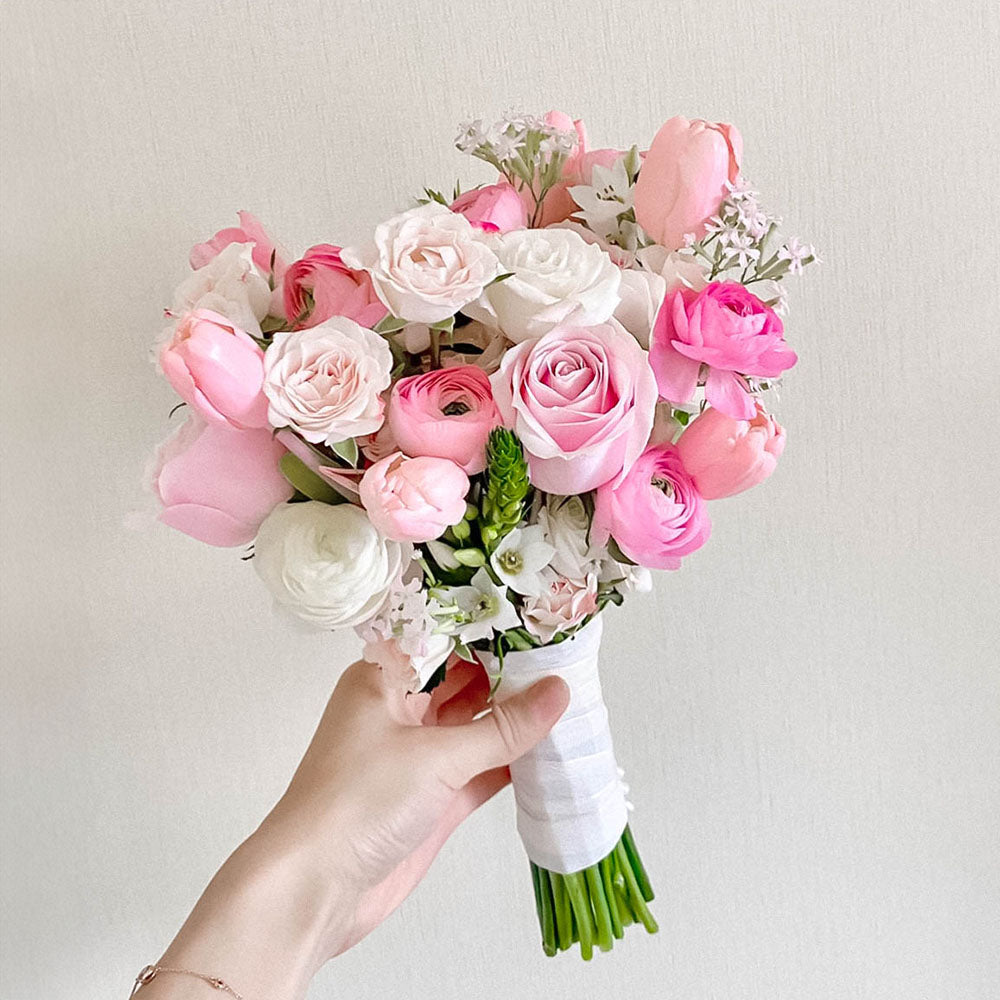
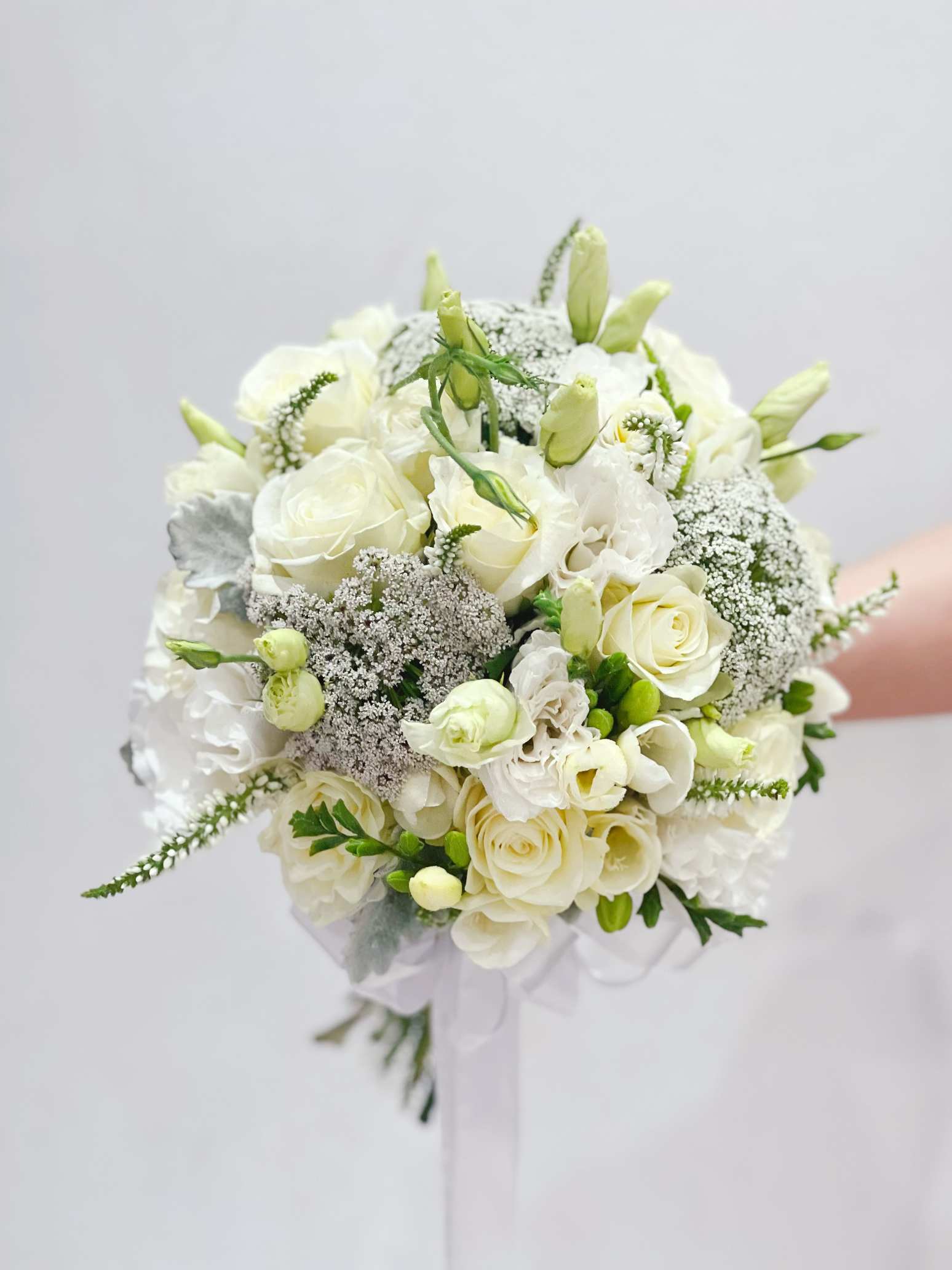
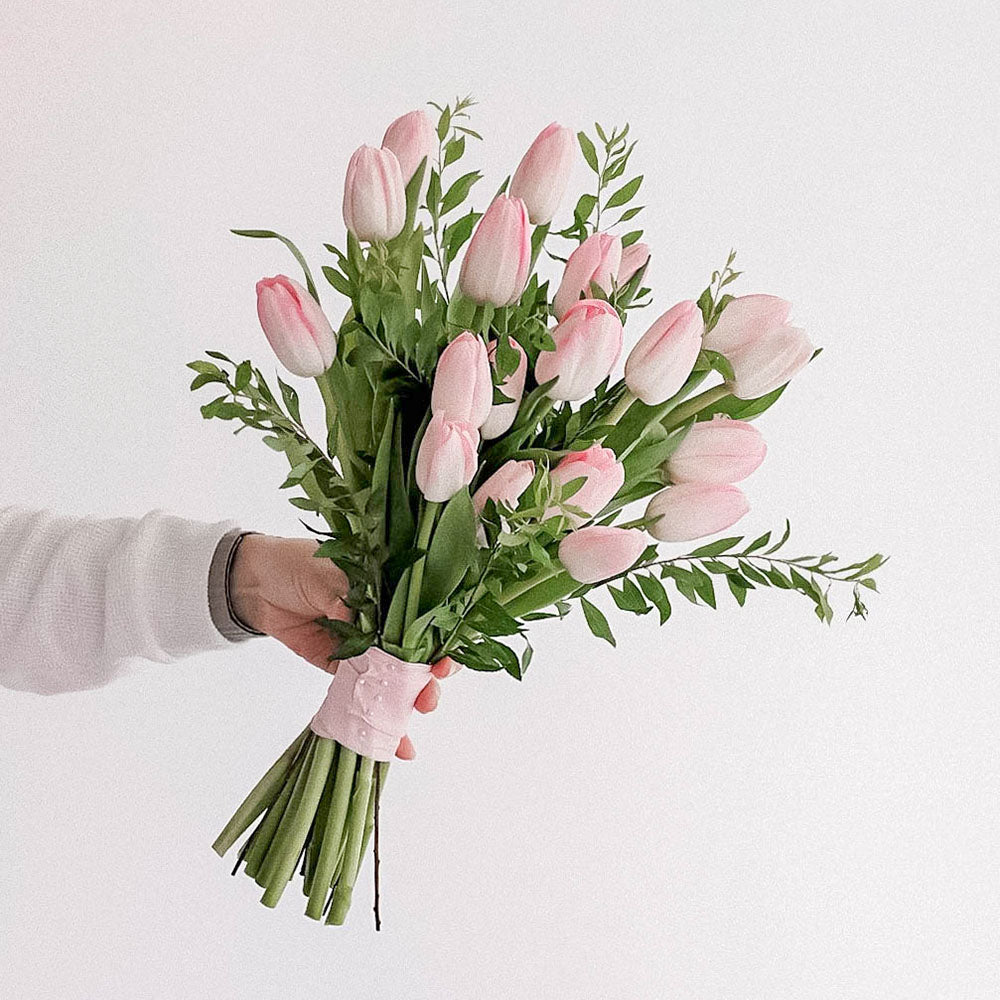
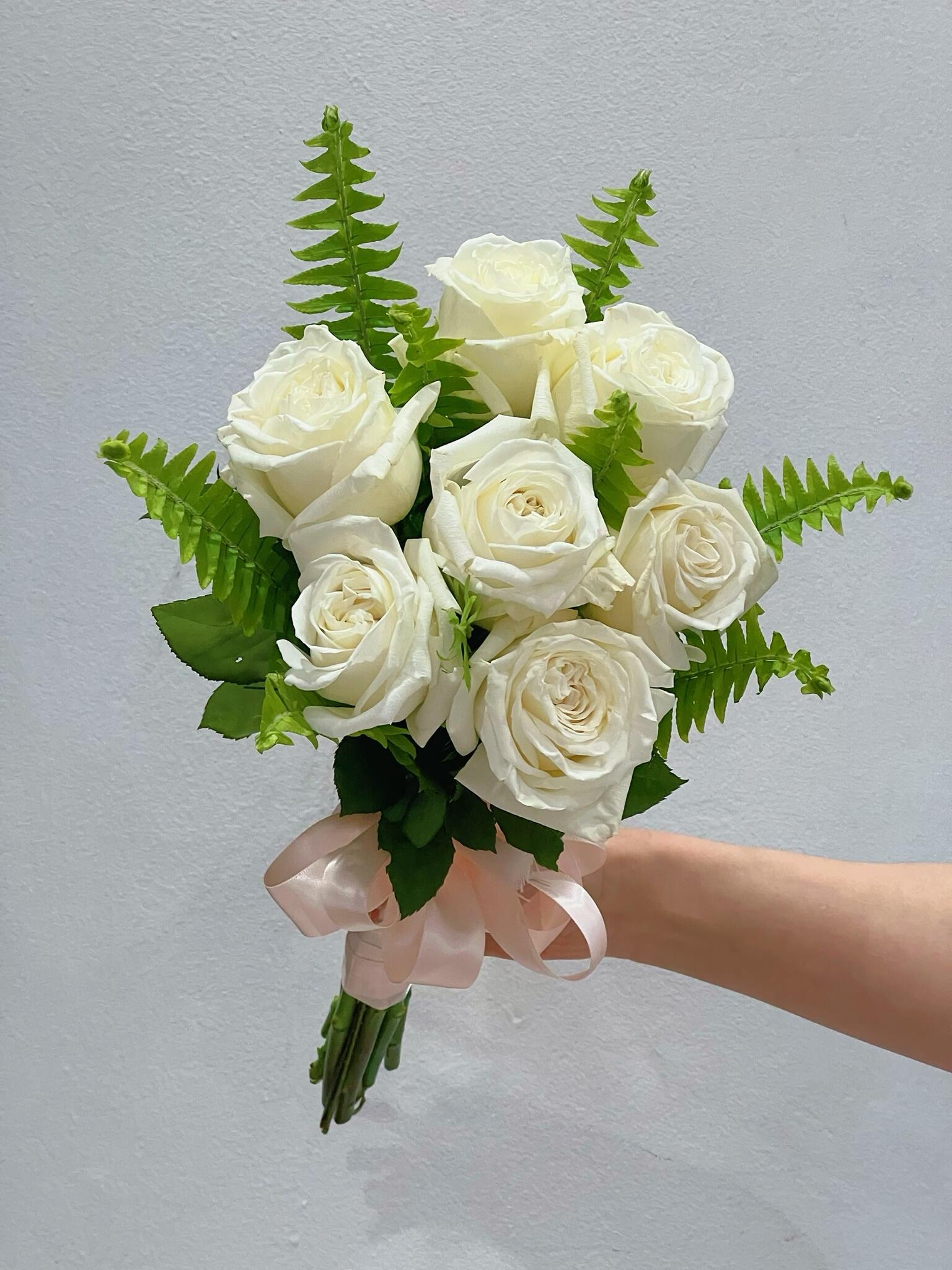
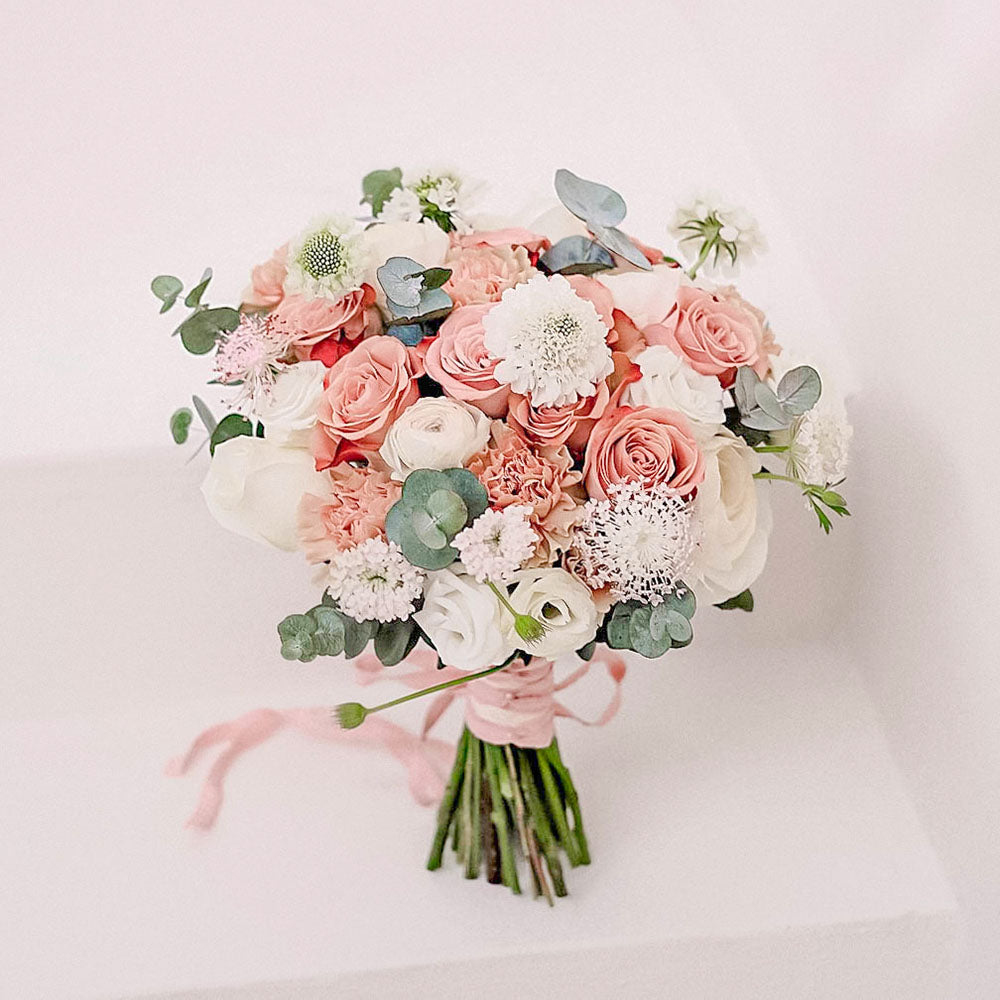
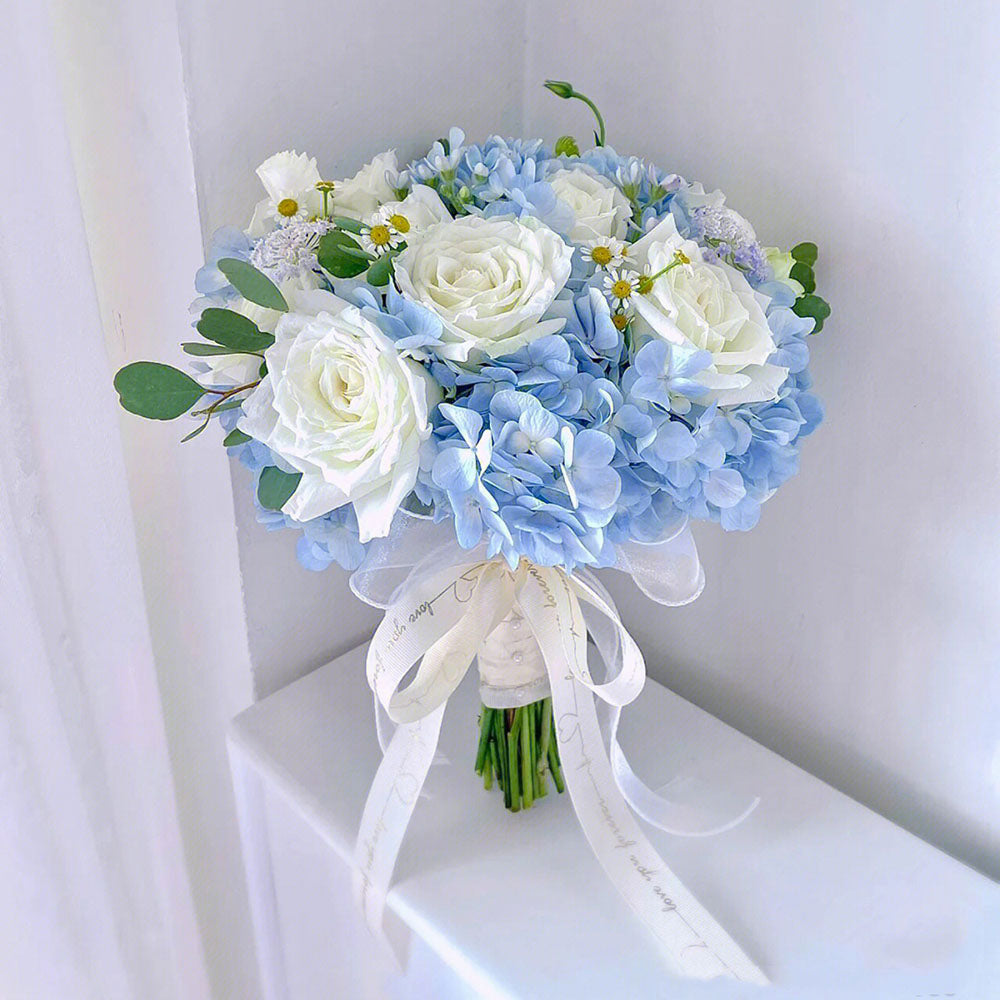
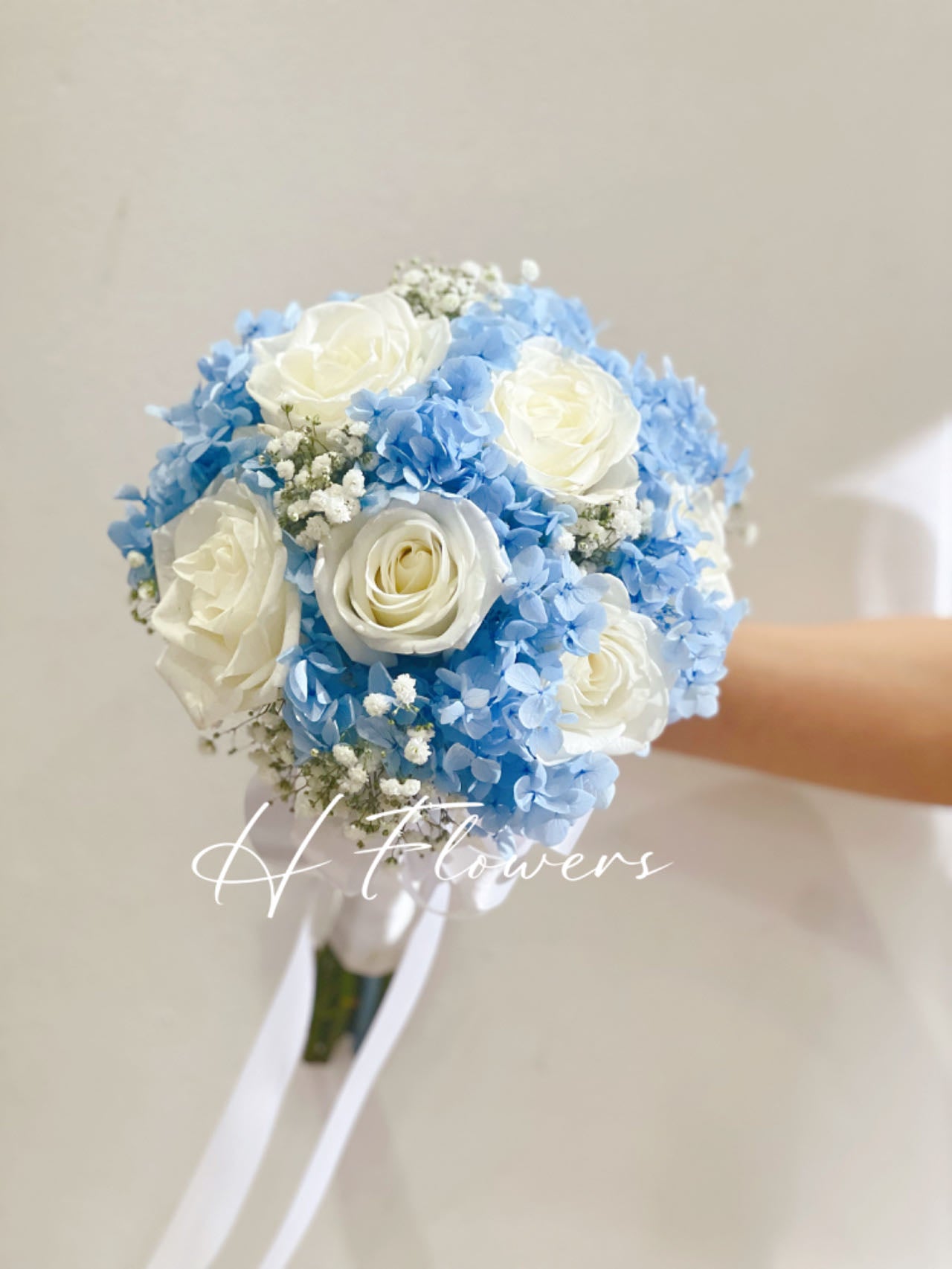
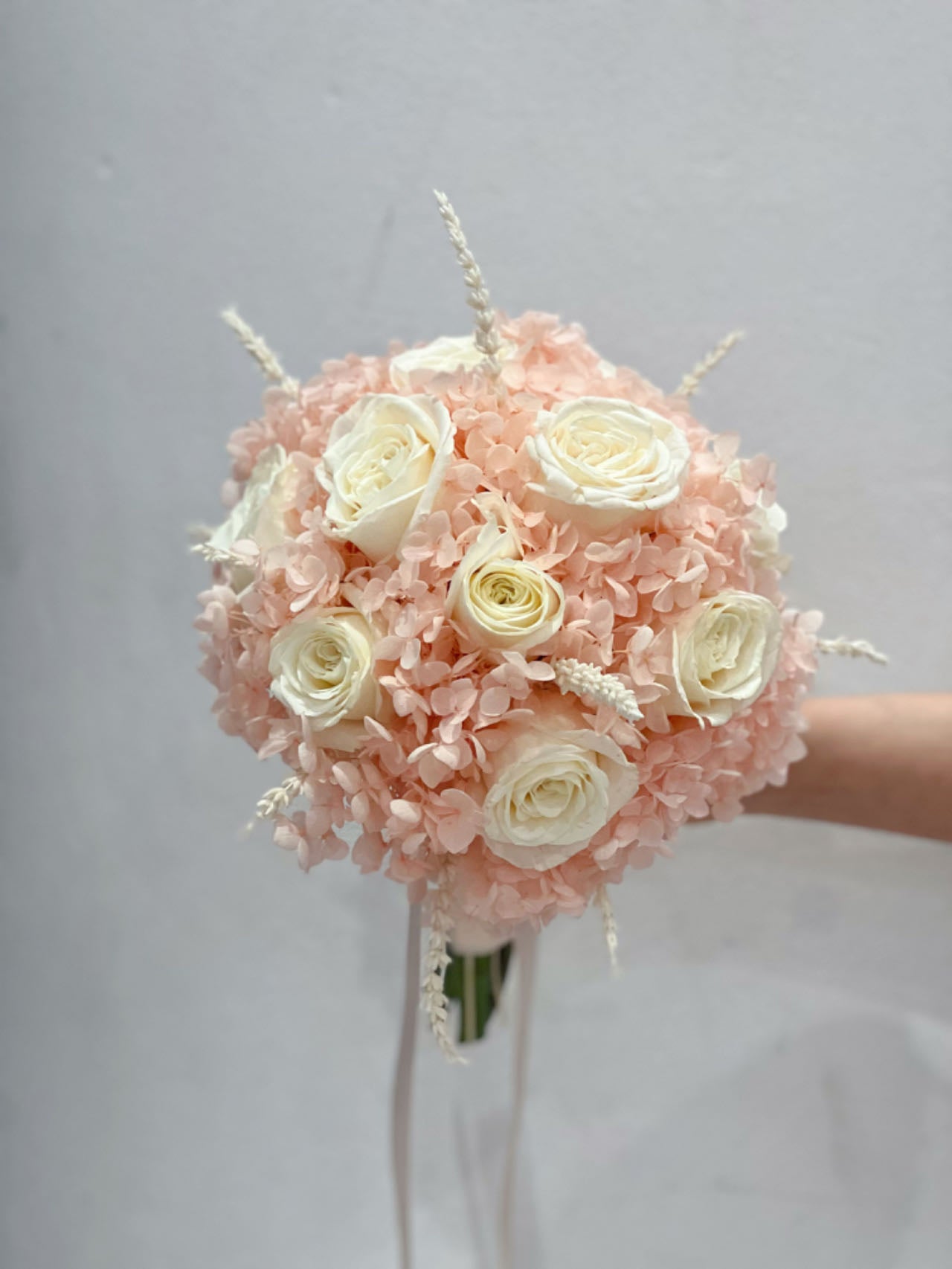
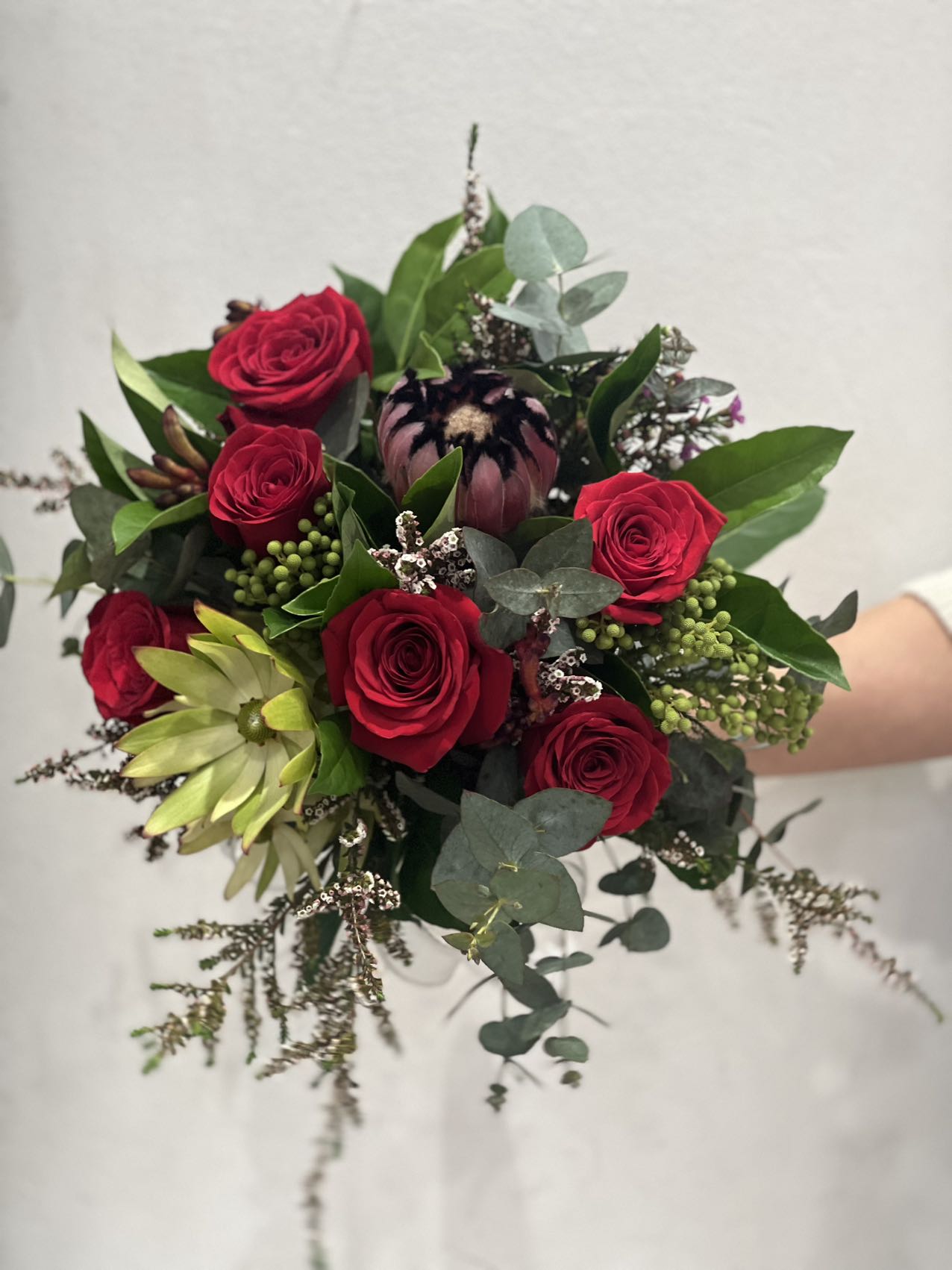
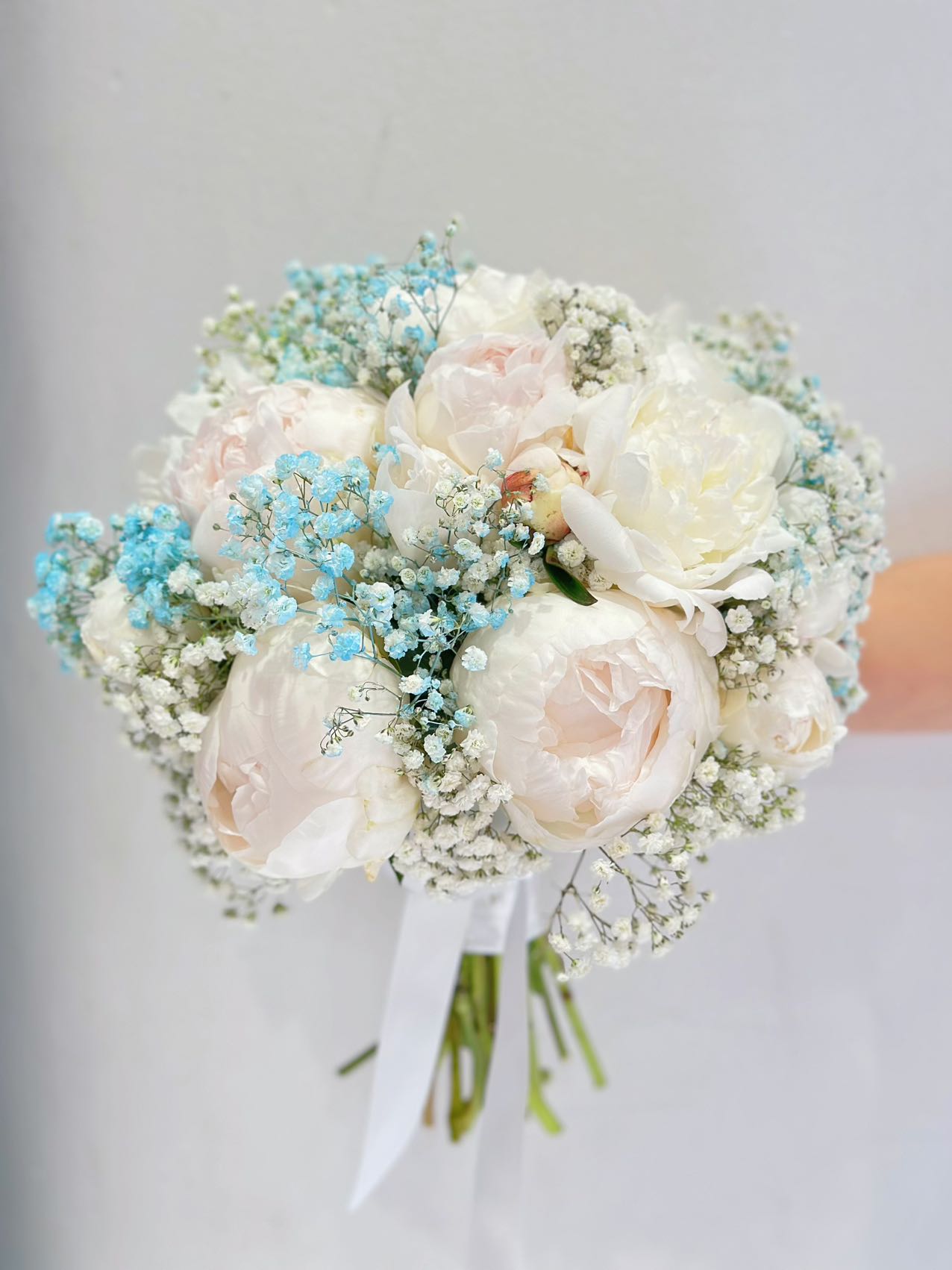
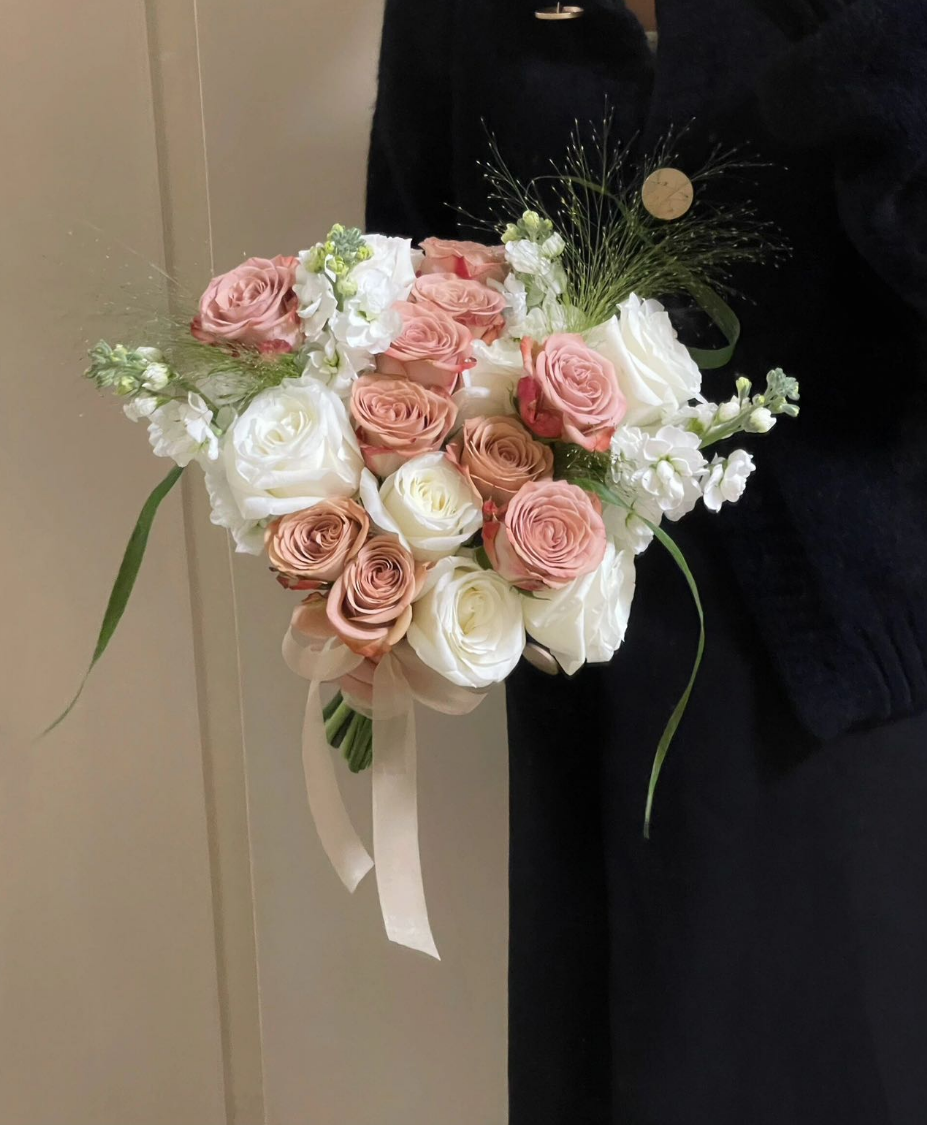
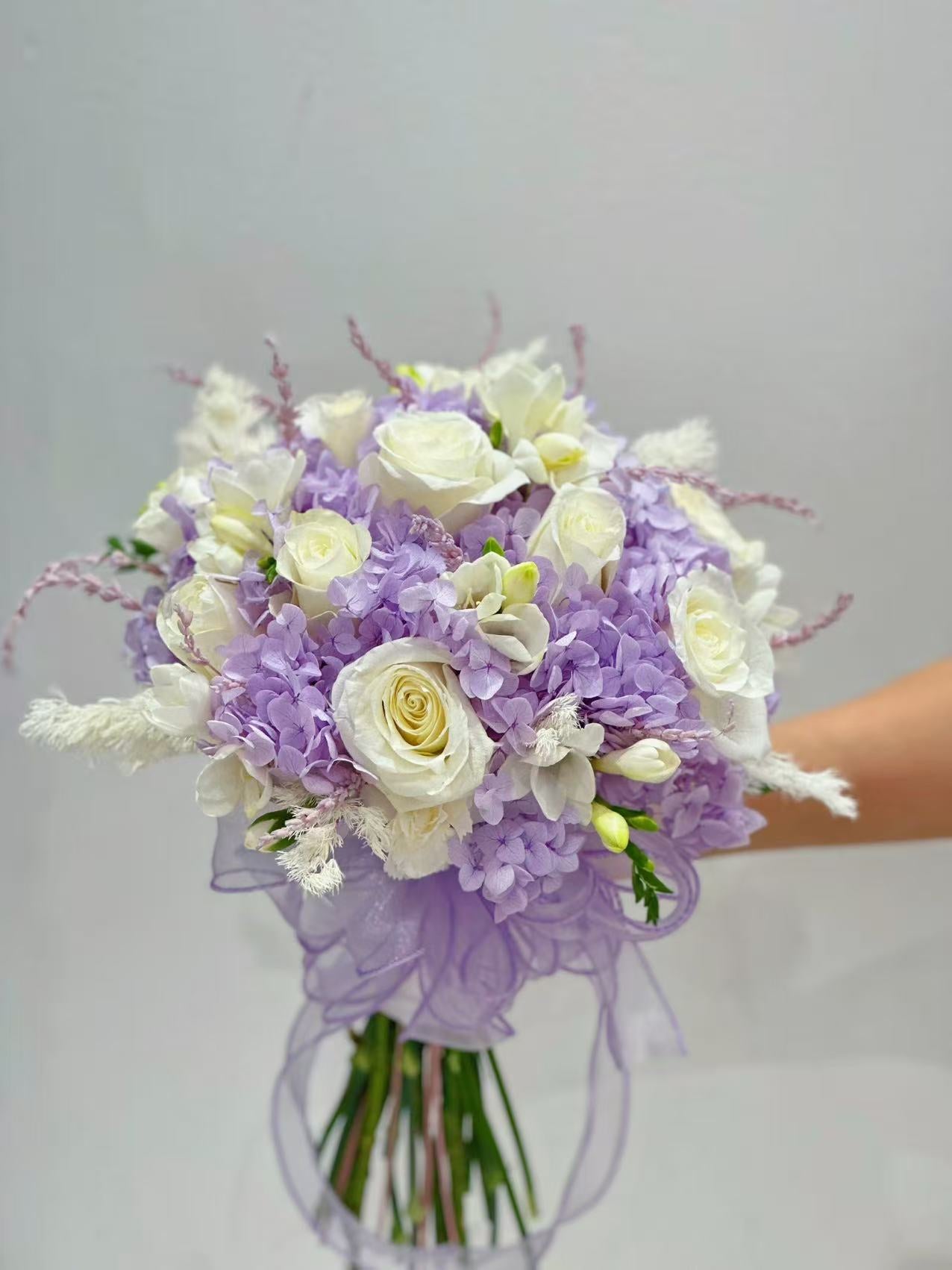
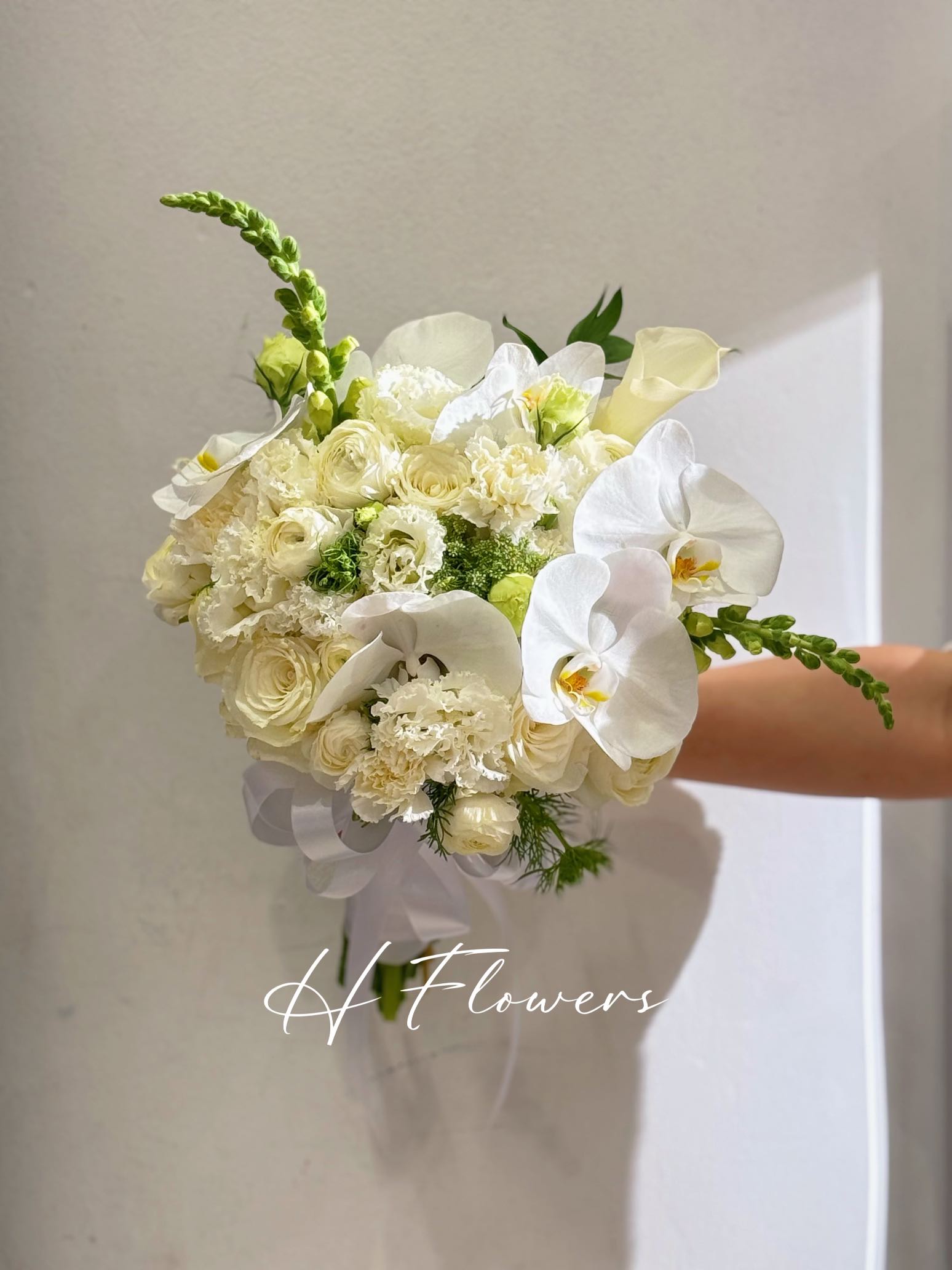
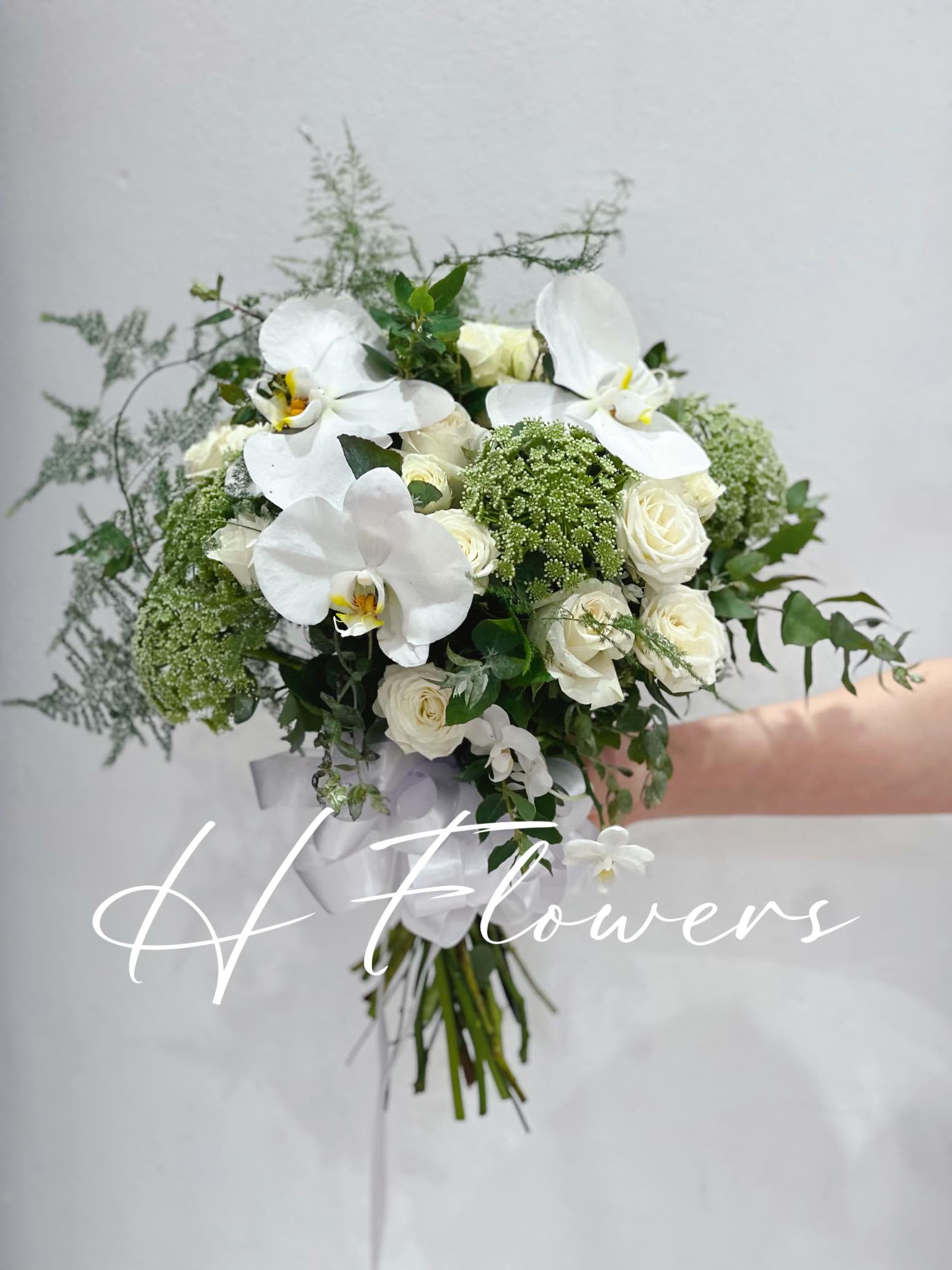
Browse bridal bouquets, or the wider hand-tied bouquet range if you want a bridesmaid design outside the wedding collection.
Worn
| Who | Usually | Notes |
|---|---|---|
| Groom | 1 buttonhole | Often slightly different so he reads as the groom in photos |
| Groomsmen | 1 each | Include the ring bearer if he is old enough to wear one |
| Fathers | 1 each | Both fathers, plus any stepfather in the party |
| Grandfathers | 1 each | The most commonly forgotten item on the whole list |
| Mothers | 1 corsage each | Ask wrist or pin before ordering - it is not interchangeable |
| Grandmothers | 1 corsage each | Second most commonly forgotten |
| Celebrant, readers, ushers | 1 buttonhole each | Anyone standing at the front with a formal role |
All of these come from the buttonhole and corsage range - white, red, pink and blue rose designs.
Count the people, then count again the week before
Bridal parties change. A groomsman is added, a grandmother decides to travel, the celebrant brings an assistant. Personal flowers are made fresh on the morning, so a late addition is far easier to absorb than a late subtraction - as long as we know before that morning.
Bridal bouquet shapes
You do not need to know flower names. A photo of the dress, a colour palette and roughly how tall you are is enough for a florist to work from.

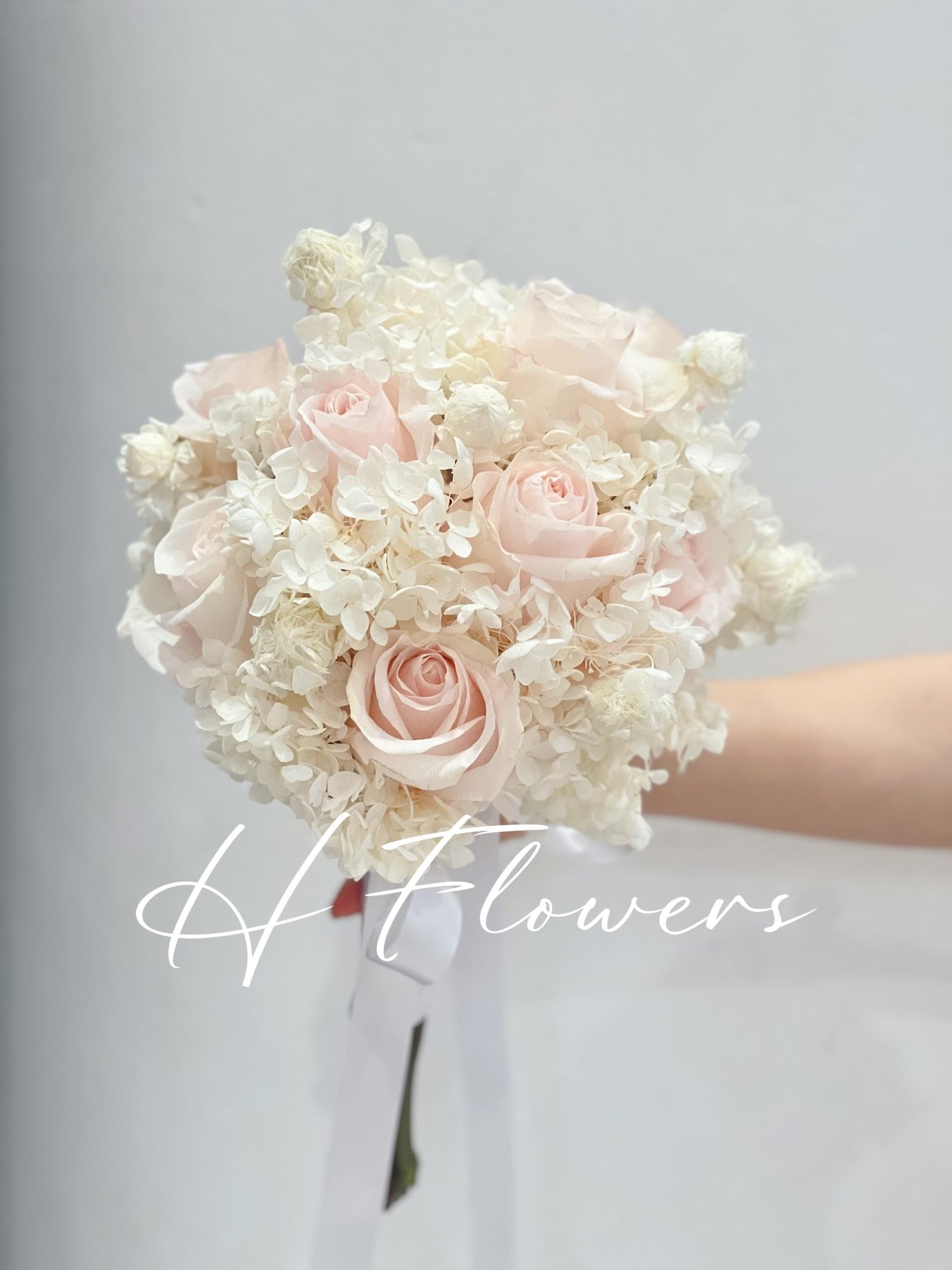
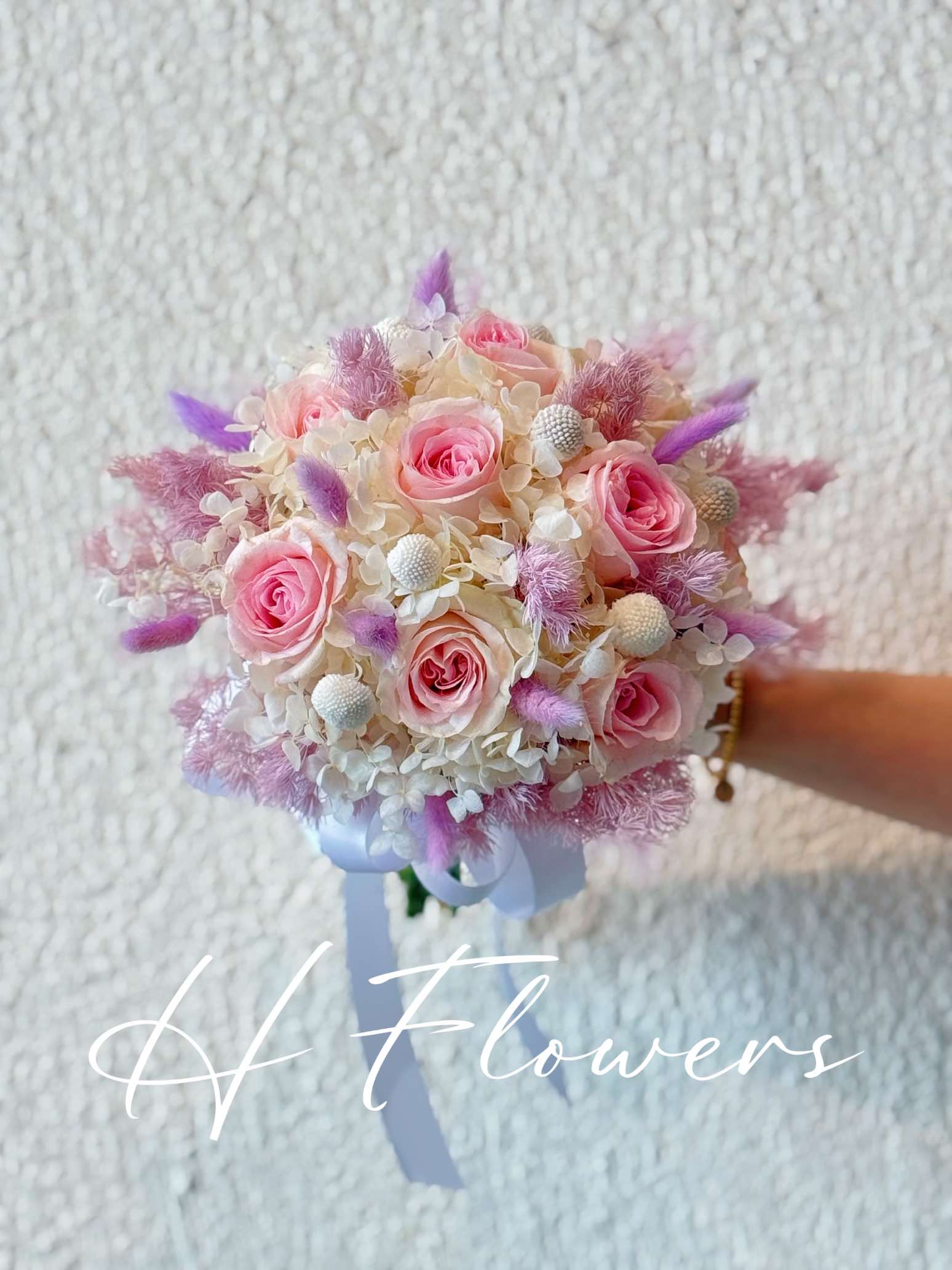
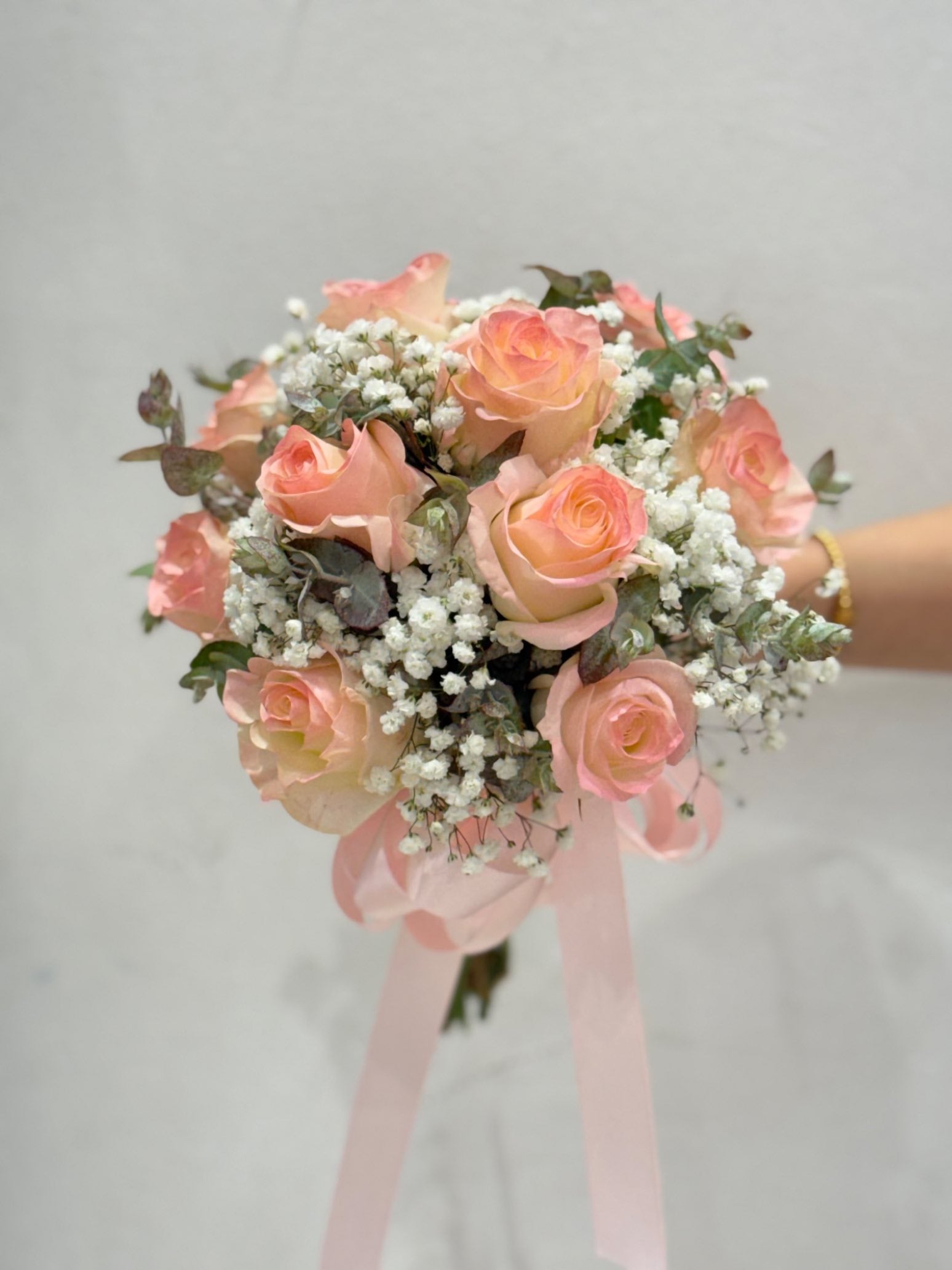
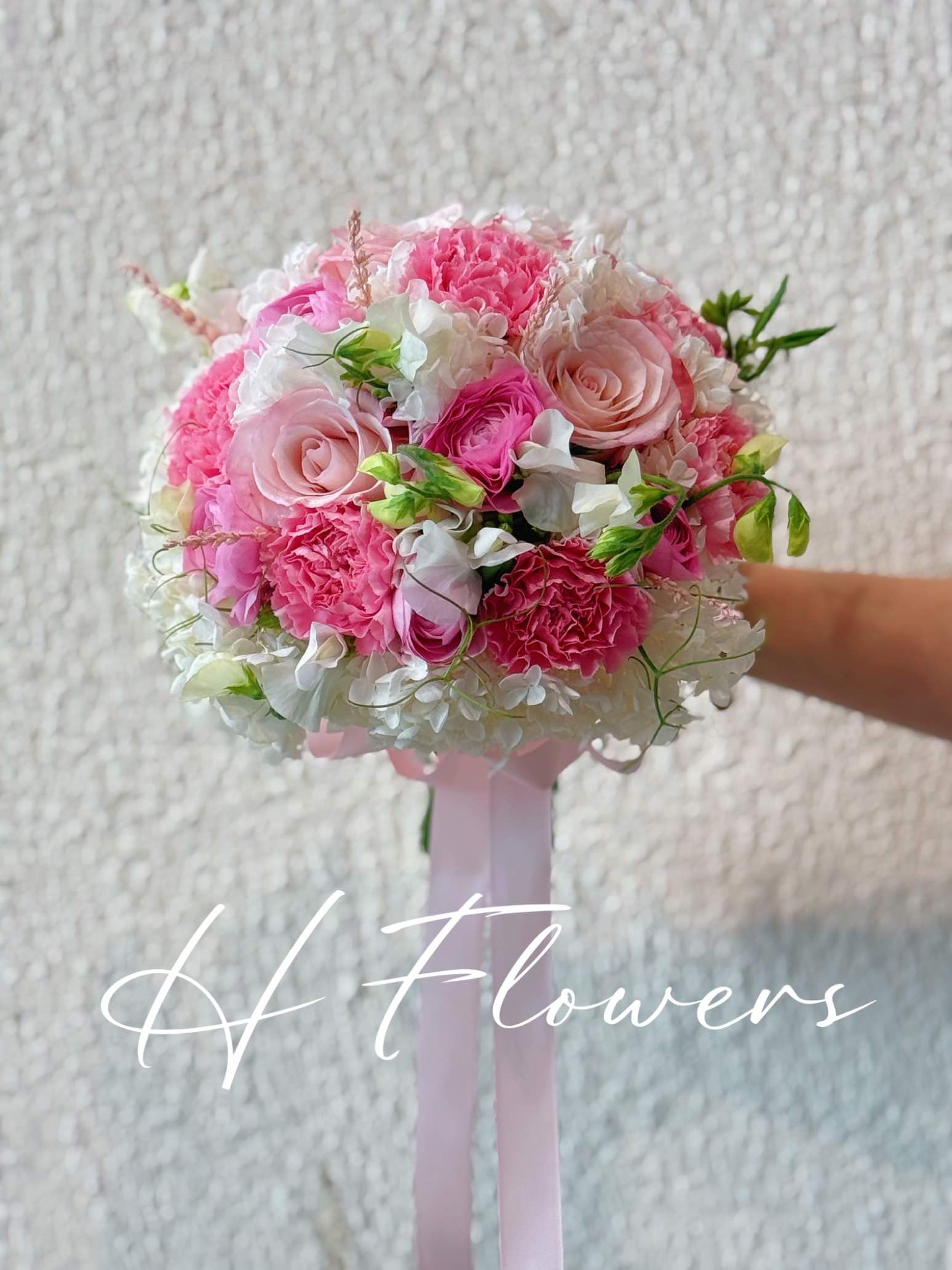
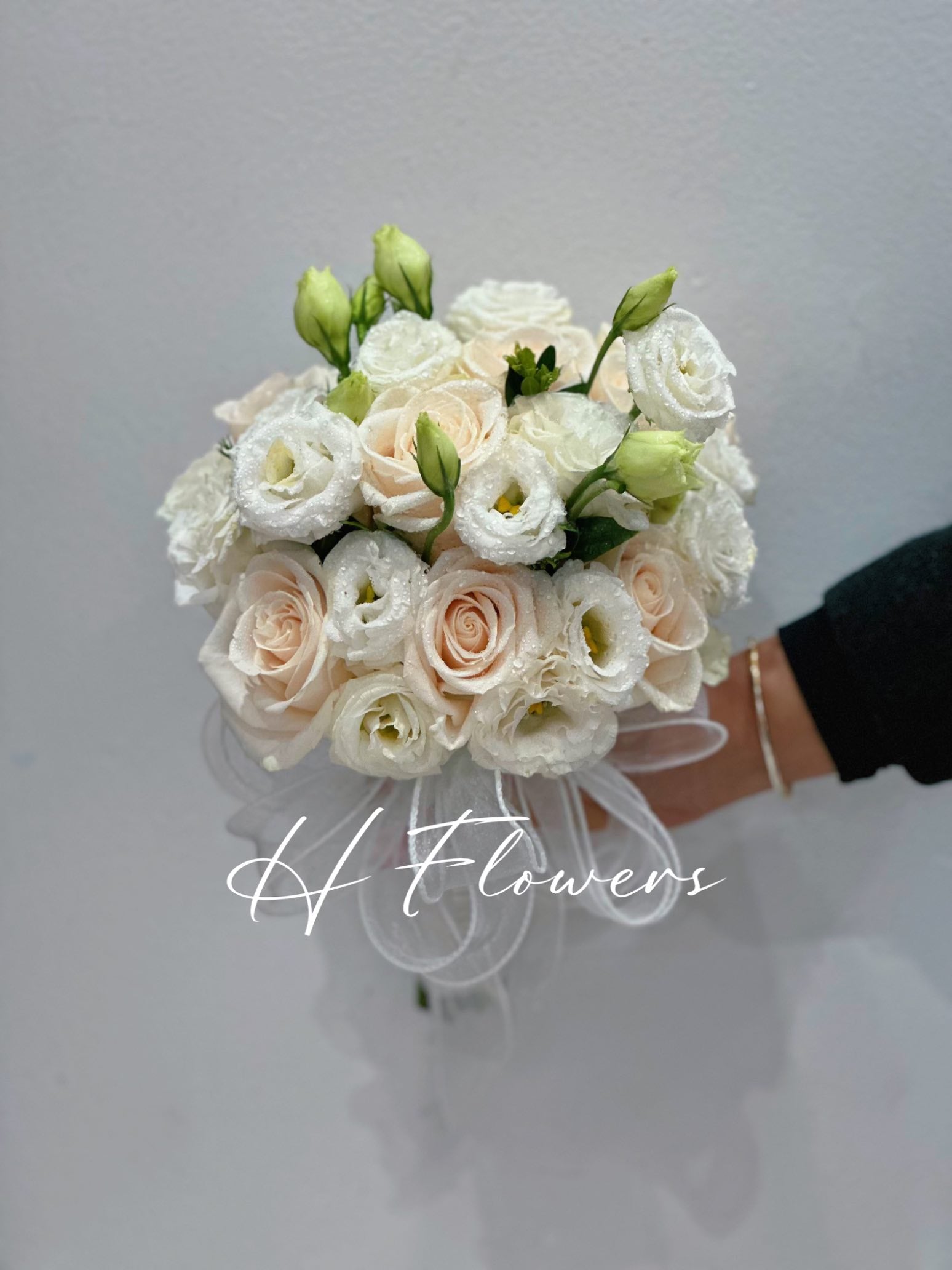
Round posy
Compact and symmetrical, and the easiest shape to hold steadily through a long ceremony. Reads well on a petite frame and against a fitted dress.

Hand-tied
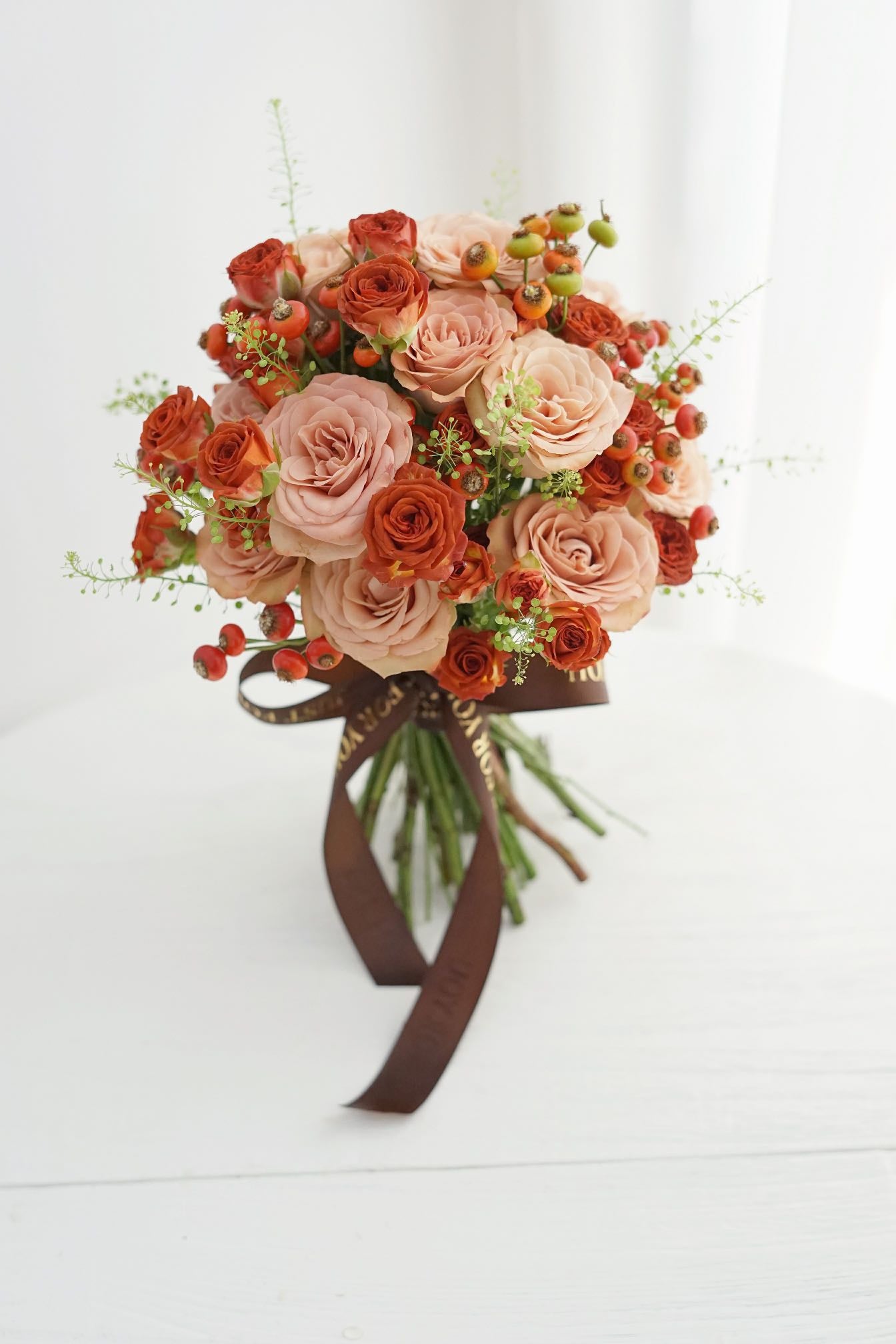
Looser and gathered, stems left visible. Reads relaxed rather than formal, which is why it suits garden, winery and barn venues.

Rustic and trailing
Foliage-led with movement at the base. Photographs well in wide shots and balances a taller frame or a full skirt.

Statement bloom
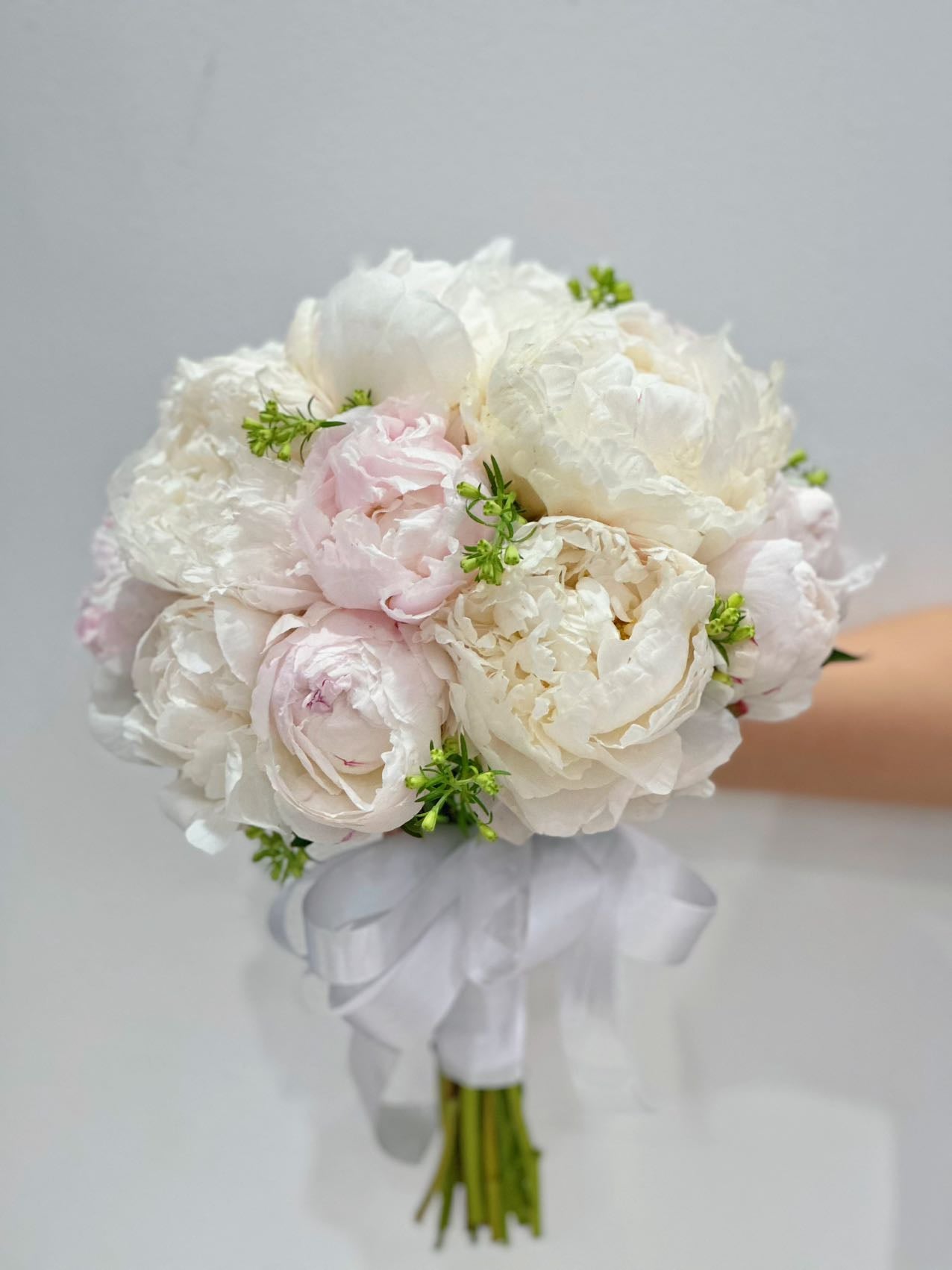
Built around one hero flower - a peony, garden rose or hydrangea. Strictly seasonal, so check the month before settling on it.
Size it to you, not to the photo
A bouquet should sit at your natural waist without hiding the bodice of the dress. Oversized bouquets are the thing brides most often say they would change, because in photographs they read as a shape covering the dress rather than as flowers.
Match the dress, not the bridesmaids
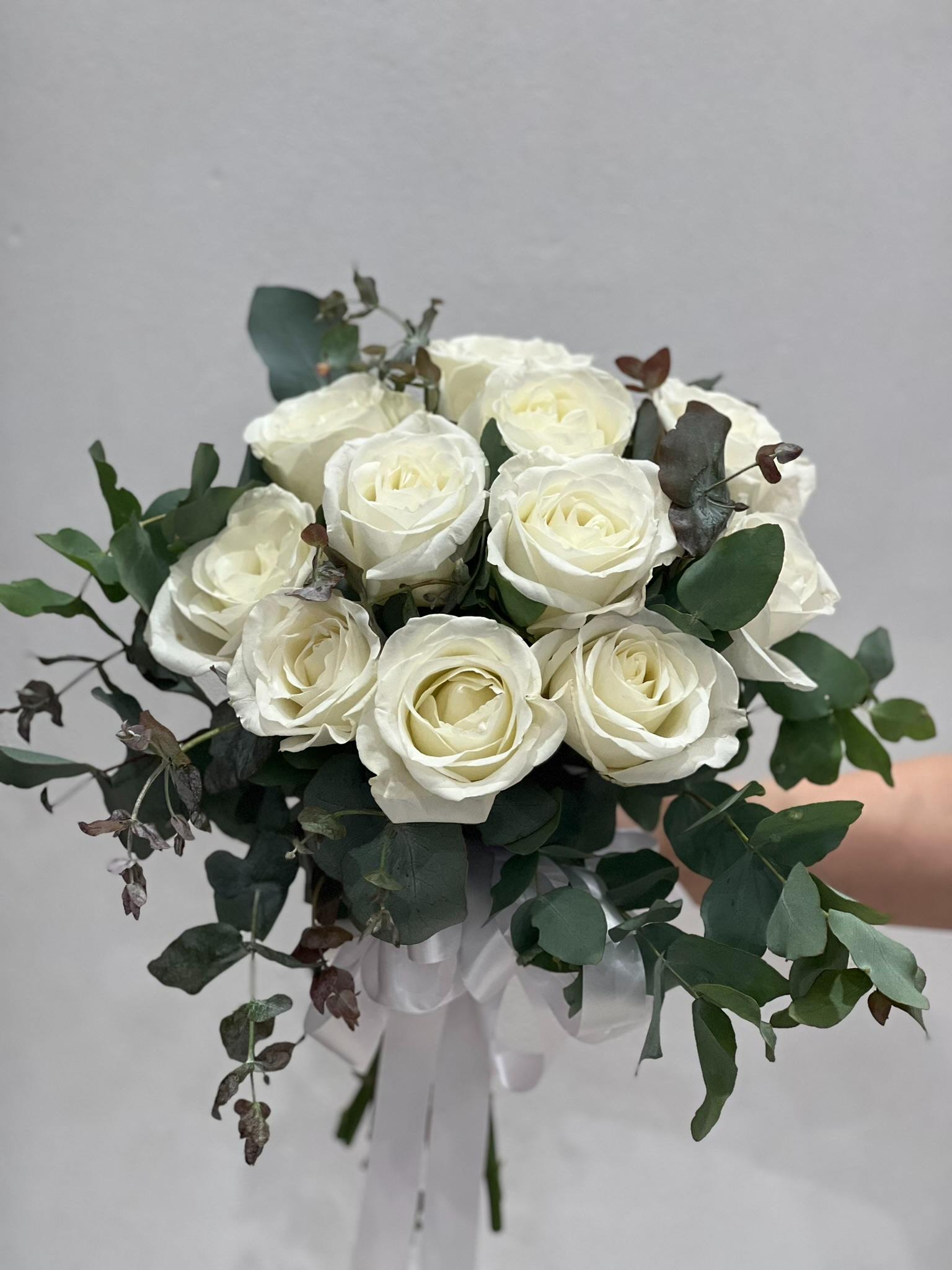
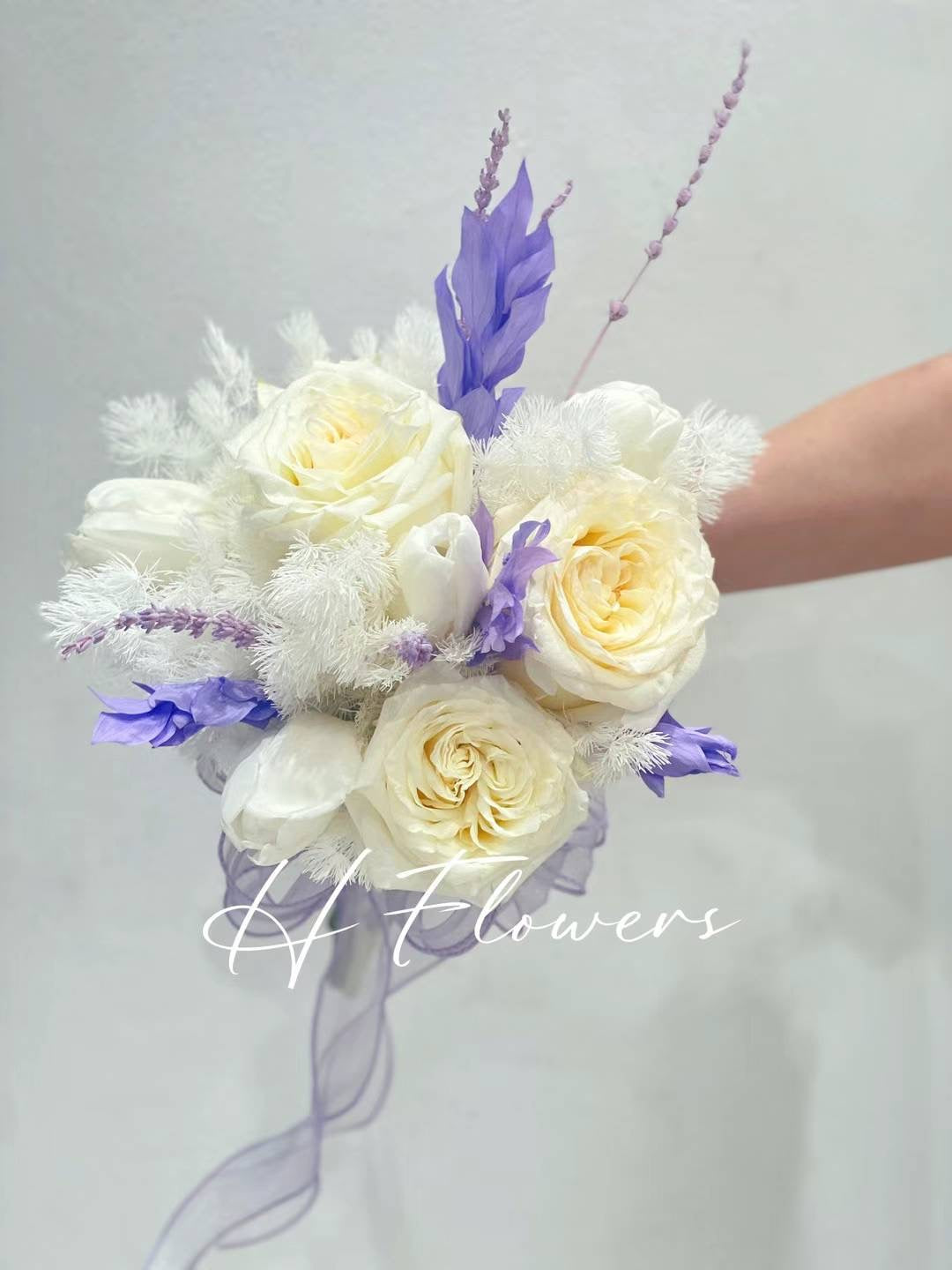
Pure white flowers against an ivory or champagne dress photograph grey. Bring a fabric swatch or a clear daylight photo. Cream, blush and soft butter tones sit more comfortably against warm whites.
Bridesmaids can differ
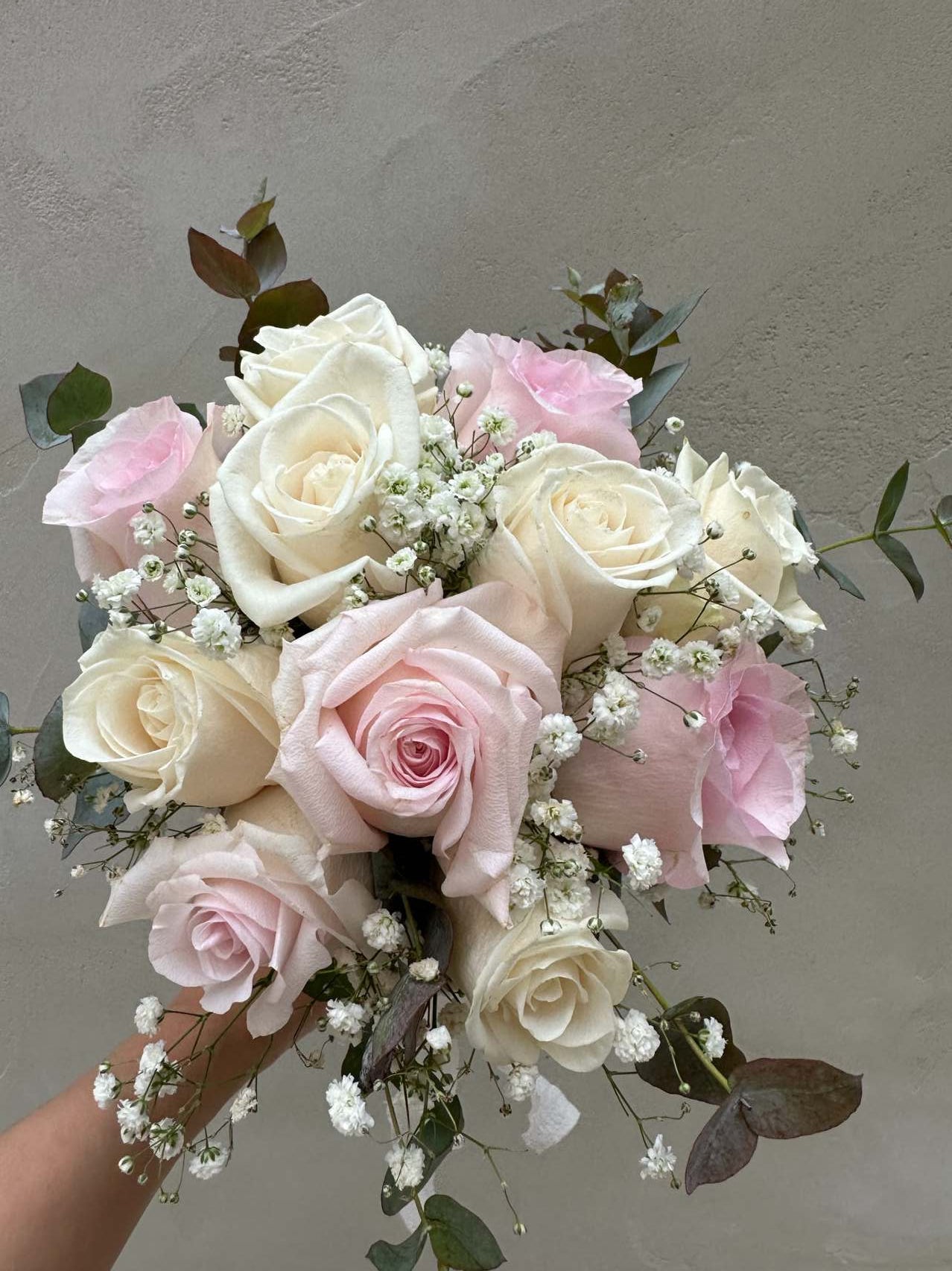
They need not be copies of yours. Smaller versions in the same palette, or a single-variety posy picking up one colour from your bouquet, both read as deliberate rather than as a compromise.
Colour is usually the harder decision. Our guide to what pink roses mean covers the shades brides ask about most, and the Ecuador rose range is where the long-stem, large-headed roses sit.
Almost everything is available all year
The date matters far less than people expect. Only a short list of flowers is genuinely tied to a season - everything else can be made in any month.
Available in any month
These are grown under glass or imported year-round, and they are what almost all bridal work is built from. Whatever your date, these are on the table.
| Flower | Why it is always there |
|---|---|
| Roses | Glasshouse-grown all year, in every bridal shade. 319 of our 416 designs use them |
| Baby's breath | A year-round filler, and the base of most soft, romantic shapes |
| Carnations | Available continuously and far more refined than their reputation |
| Lilies | Year-round, for scale and scent - pollen removed before handling |
| Lisianthus | Reads like a smaller, softer rose. The most useful year-round substitute |
| Hydrangea | Local from late spring to autumn, imported outside that |
| Chrysanthemum, gerbera, orchid | All continuously available, for colour and structure |
| Eucalyptus and foliage | Year-round, and what gives a bouquet its shape |
In practice this means a June wedding and a November wedding can have the same bouquet. See the full wedding collection or the wider bouquet range.
The short list that does depend on your date
Three flowers are worth checking before you set your heart on them. For each one there is a close year-round substitute, so nothing is ever ruled out.
| Flower | Local window | If your date falls outside |
|---|---|---|
| Peony | Late October to November | Imported in May and June; garden roses give the same full, layered shape year-round |
| Tulip | Roughly May to October | Ranunculus in spring, or lisianthus for a similar clean, cupped head |
| Ranunculus | Roughly August to November | Lisianthus or a small garden rose |
Give a palette, not a flower list
A colour palette survives a supply change without you noticing. A single named variety does not. Tell us the shades and the feeling you want, and the bouquet gets built from whatever is best in the market that week - which is how it ends up looking better than the photo you saved.
Peonies are worth naming because people search for them specifically - the peony bouquet is the design to look at, and Ecuador roses are the year-round alternative for a large-headed, long-stem look.
Who wears what, and which side
Nobody explains this in advance, and somebody always asks on the morning.

Buttonhole
The men and anyone with a formal role.

Corsage
The mothers and grandmothers, wrist or pinned.
White, red, pink and light blue designs are all in the buttonhole and corsage range.
The rules that actually matter
Left lapel, stem down. A buttonhole sits on the wearer's left, over the heart, flower head pointing up. Pin from behind the lapel at a slight angle so the fabric carries the weight rather than the pin.
Wrist or pin - ask first. A pin-on corsage can mark or tear delicate fabric, and a wrist corsage gets in the way of a handbag through a long ceremony. A five-second question that avoids an awkward morning.
Which wrist. Traditionally the left. Practically, the non-dominant hand, so it survives the reception.
Keeping them overnight. They hold well in a fridge for a day, in a sealed container, away from fruit - ripening fruit gives off ethylene, which ages cut flowers fast. Keep the petals off the back wall, where they can freeze.
Bring spare pins. Two per buttonhole. They are the most likely thing to go missing between getting dressed and the ceremony.
The same designs work for graduation and school formals, which is most of what this range is used for outside wedding season.
Three kinds of flower, three different jobs
Most weddings use fresh throughout, and that is the right default. There are two situations where the others earn their place.
| Fresh | Dried | Preserved | |
|---|---|---|---|
| What it is | Cut flowers, arranged the same day | Naturally air-dried stems | Real flowers treated to hold texture and colour |
| Lasts | Days | Years, in the right spot | Years, and closest to fresh in appearance |
| Handles heat | Needs shade and water | Unaffected | Unaffected |
| Best for | Bouquets, buttonholes, anything photographed close up | Hair pieces, cake flowers, favours, long outdoor days | A keepsake piece, or a gift that outlasts the day |
| Watch out for | Heat, wind, and time out of water | Brittle stems - not ideal for a bouquet handled all day | Direct sun will fade it over months |
Fresh
Still the right answer for the bouquet itself. Nothing photographs like a flower cut that week, and every bouquet is hand-arranged at Box Hill Central or Melbourne Central. Bridal bouquets

Dried
Muted, textural and completely unbothered by a 38 degree afternoon. Suits hair flowers, cake flowers and anything sitting in the sun all day. Dried flower range

Preserved
Real flowers that keep the softness of fresh ones for years. Usually a keepsake piece, or a gift to the mothers. Preserved flower range
A mixed approach is normal
Fresh bouquets and buttonholes, dried in the hair and on the cake, and a preserved piece kept afterwards. Nobody reads it as three different things - it reads as one palette. If you like the dried look generally, this piece on dried flowers covers how they behave over time.
Keeping flowers alive from the morning to the last dance
The night before
Keep them in water in the coolest room in the house, out of direct light and away from the fruit bowl. Never in the fridge alongside food.
The morning
Leave bouquets in water until the last possible moment. Pat the stems dry before anyone in white holds them - wet stems mark silk. Keep a towel with the flowers, not in another room.
Between ceremony and reception
Bouquets go into water, not onto a car seat. A jug or an ice bucket at the venue does it. Twenty minutes in a closed car in summer is enough to lose them.
That night
Trim two centimetres off the stems on a diagonal and put the bouquet into fresh water. Done that night rather than the next afternoon, most designs keep for several days more.
Melbourne makes this harder than it needs to be
On a hot day. A closed car parked in the sun becomes far hotter than the air outside within twenty minutes, and roses do not recover from it. Flowers travel with the air conditioning on, and get handed over at the ceremony rather than left at a hotel through the middle of the day.
At an open or coastal venue. Wind is why loose, trailing bouquets look different in Mornington and Bellarine photographs than they did in the studio. A tighter, hand-bound shape holds together. Buttonholes want a second pin.
Hay fever and scent. Roses, lisianthus, orchids and hydrangea are low-pollen and lightly scented, and a whole palette can be built from them. Lilies are neither, and lily pollen stains silk permanently - the anthers can be removed before anyone handles the flowers.
Keeping the bouquet afterwards
To air-dry it, hang it upside down in a dark, dry, airy spot within a day or two - colour holds better the sooner you start. Pressing and resin work are done by specialist preservers and generally need the flowers within about 48 hours, so it is a decision to make before the wedding rather than after.
How wedding flowers get to you
Same-day delivery across Greater Melbourne
Order by 3PM for delivery the same day, seven days a week. For a wedding, give us the venue name, a contact who will be on site, and the time your photographer arrives - personal flowers should land before the photography starts.
Free pickup from either store
Box Hill Central and Melbourne Central, both inside shopping centres with parking and lift access - which matters more than it sounds on a wedding morning when someone is collecting in a dress.
Hand-arranged on the morning
Bouquets, buttonholes and corsages are made the same day at Box Hill Central or Melbourne Central, from what came through the market that week rather than from a catalogue photograph taken last year.
If your date falls in a peak month
October, November, March and April are the busiest wedding months in Australia, and 14 February and Mother's Day put pressure on particular flowers regardless of weddings. None of that stops an order - it means a date in those windows is worth raising with us earlier rather than later. Contact either store.
Colour, custom and two ceremonies
A Chinese-Australian wedding usually runs two events with two different floral languages, and flowers that suit one can be wrong for the other.
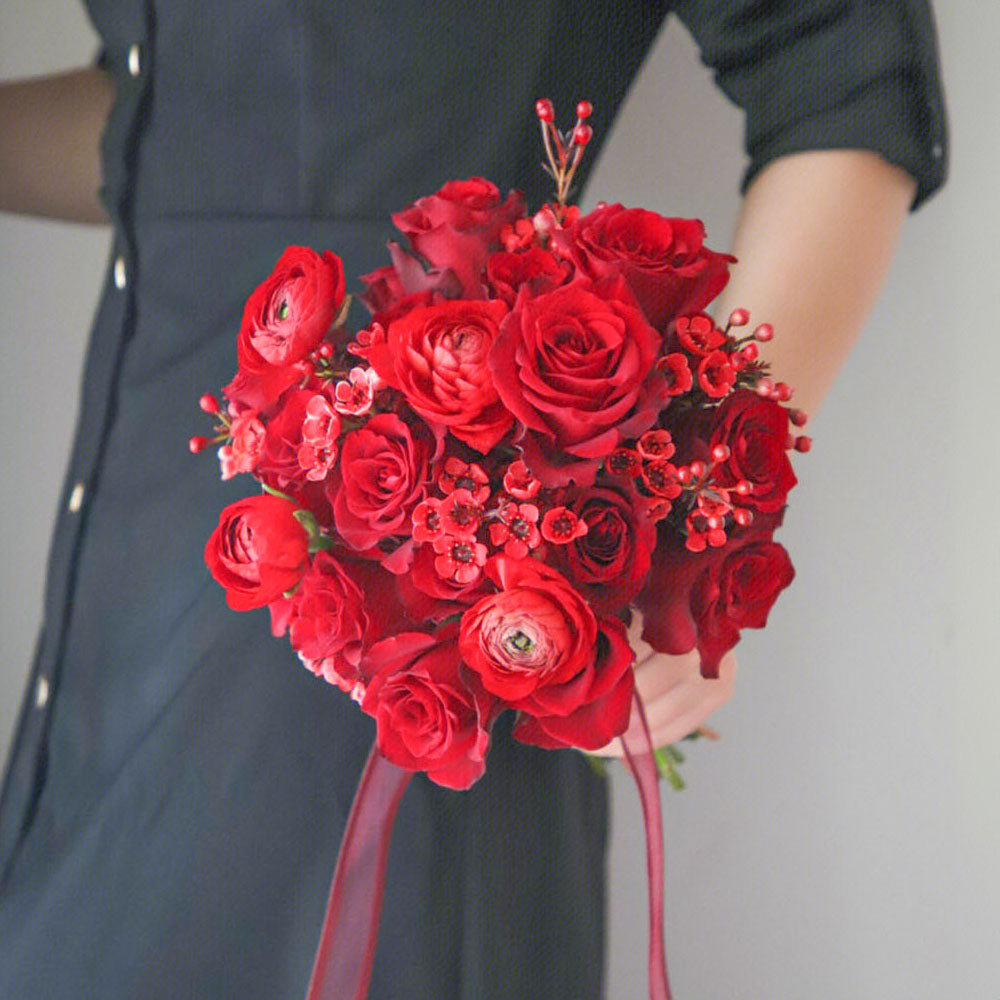
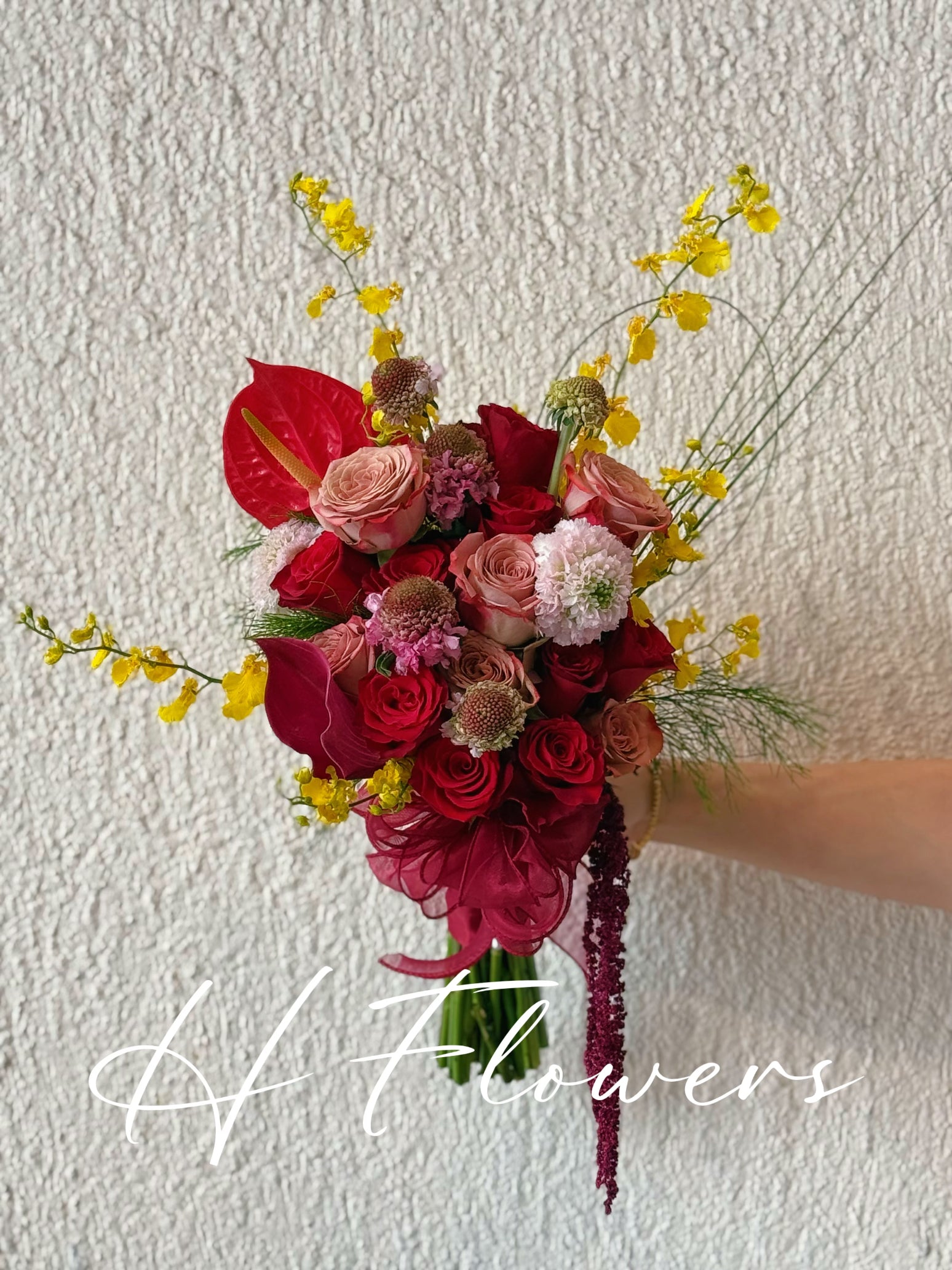
Red and gold for the tea ceremony and the banquet. Red carries luck and celebration, and it is the expected palette for the family-facing parts of the day - the door games in the morning, the tea served to both sets of parents, and the banquet.
White needs care. White chrysanthemums in particular are strongly associated with funerals and mourning in Chinese custom, and a predominantly white arrangement can read the wrong way to older family members. Cream, champagne and blush carry the same softness without the association, which is why many couples keep pure white for the Western ceremony and photographs and shift warmer for everything the family sees.
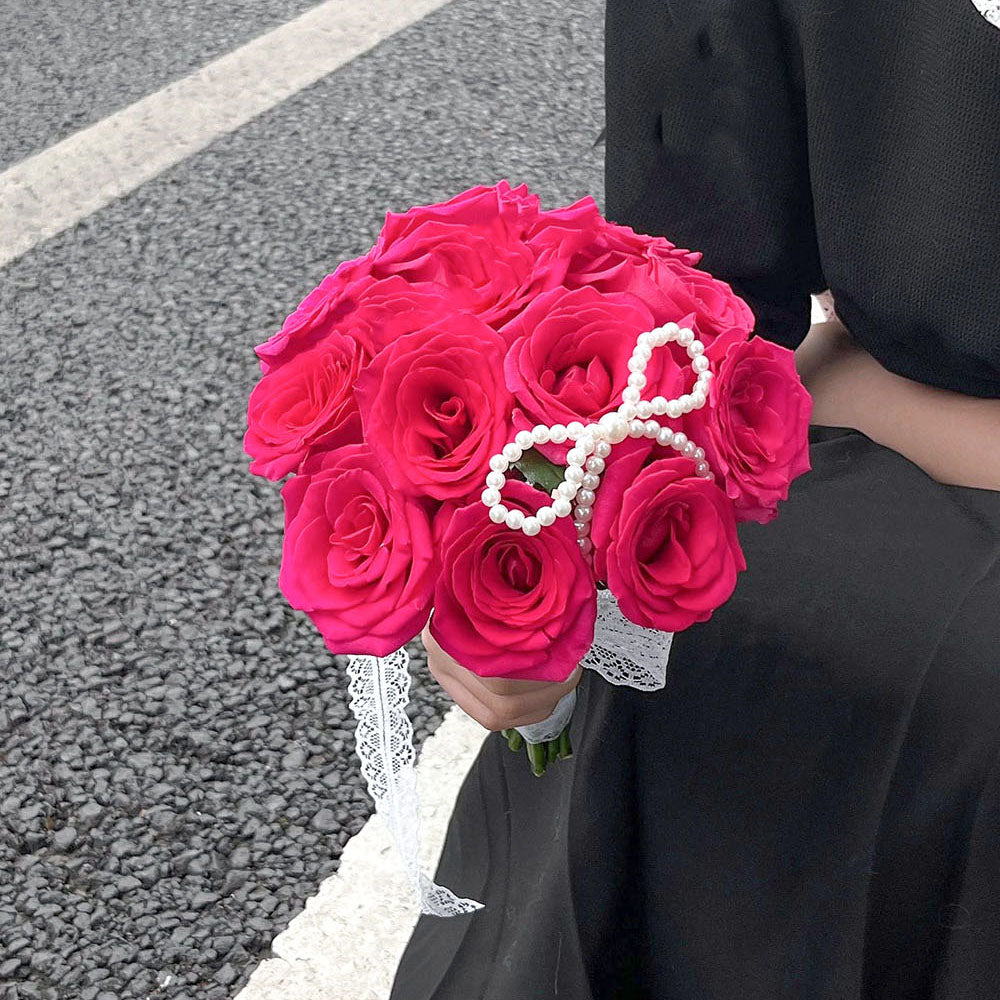
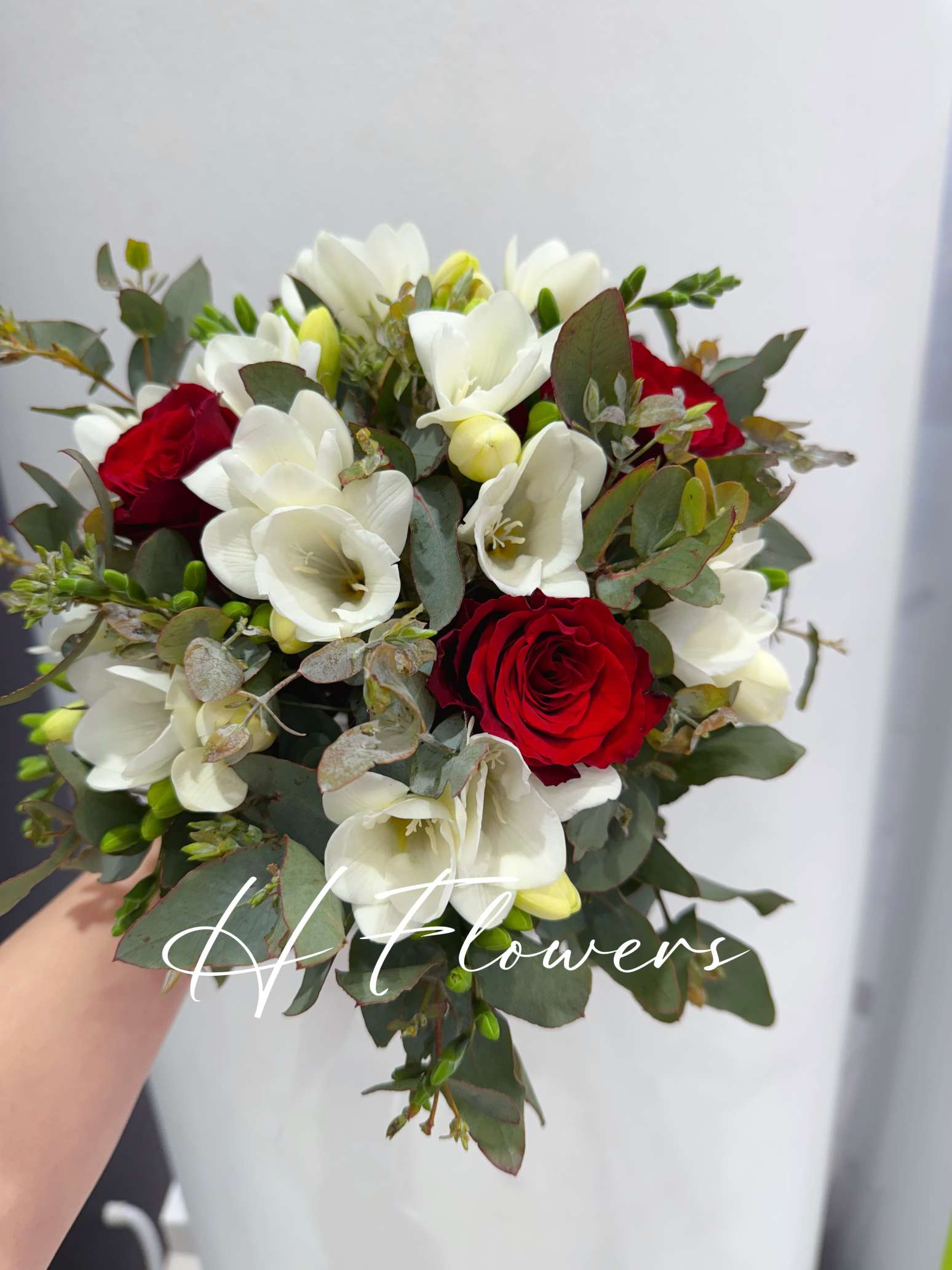
Two bouquets is a common answer. A red or pink design for the morning and the tea ceremony, and a white or pastel one for the ceremony and reception.
Red and pink designs sit in the romance range. This site is also available in Chinese: 中文婚礼鲜花页面

A red rose design for the tea ceremony and door games.
Wedding flower questions, answered
What is in a bridal bouquet in Melbourne?
Most bridal bouquets in Melbourne are rose-led, because glasshouse roses are the one flower available in good condition all year. Seasonal additions change the character - ranunculus and sweet pea in spring, hydrangea and lisianthus through summer, dahlias and field roses in autumn. Of the 31 designs in our wedding collection, 27 are built on roses.
Which bridal bouquet shape should I choose?
A round posy is compact and the easiest to hold through a long ceremony. A hand-tied bouquet is looser with the stems showing, and reads relaxed rather than formal. A rustic, trailing bouquet has movement at the base and photographs well in wide shots. A statement design is built around one hero flower. Shape matters more than flower choice in photographs, and it should be sized to you rather than to the picture you saved.
Can I have peonies in my wedding bouquet?
Locally grown peonies are available from late October through November, sometimes into early December. Peonies sold in Melbourne in May and June are imported from the Northern Hemisphere. If a peony bouquet is essential to your design, mid to late November is the dependable window; outside it, garden roses give a similar full, layered shape.
Does my wedding date limit which flowers I can have?
Much less than most people expect. Roses, baby's breath, carnations, lilies, lisianthus, chrysanthemums, gerberas, orchids and foliage are available every month of the year, and almost all bridal work is built from them - a June wedding and a November wedding can have the same bouquet. Only peonies, tulips and ranunculus are genuinely tied to a window, and each has a close year-round substitute.
How many buttonholes and corsages do I need?
Buttonholes for the groom, groomsmen, both fathers, grandfathers and anyone with a formal role such as the celebrant, readers and ushers. Corsages for the mothers and grandmothers. Grandfathers and grandmothers are the two most commonly forgotten. All of them come from the buttonhole and corsage range, in white, red, pink and light blue.
Which side does a buttonhole go on, and which wrist for a corsage?
A buttonhole goes on the wearer's left, over the heart, flower head up and stem down, pinned from behind the lapel at a slight angle. A wrist corsage traditionally goes on the left, but the practical answer is the non-dominant hand so it survives the reception. Ask whether the wearer would prefer a pin-on instead - pins can mark delicate fabric.
What is included in a wedding flower package?
There is no fixed package here - you choose the pieces you need. In practice a bridal party order is a bouquet for the bride, one for each bridesmaid, a posy for the flower girl, buttonholes for the groom, groomsmen, fathers and grandfathers, and corsages for the mothers and grandmothers. The checklist at the top of this page runs through every role so nothing is missed.
How long will my wedding bouquet last?
A bouquet arranged on the morning holds through the ceremony, photographs and reception out of water. Trim the stems and put it in fresh water that night and most designs keep for several days more. Hydrangea that has wilted can often be revived by submerging the whole flower head in cool water for about half an hour.
How do I preserve my bouquet after the wedding?
Air-drying is the simplest: hang it upside down in a dark, dry, airy spot within a day or two, and the colour holds better the sooner you start. Pressing and resin work are done by specialist preservers and usually need the flowers within about 48 hours. If you want something built to last from the beginning, the preserved and dried ranges are made for it.
Should I use a dried flower bouquet for a wedding?
For the bouquet itself, fresh is still the better answer - nothing photographs quite like it. Dried flowers are worth considering for hair pieces, cake flowers and favours, particularly for a long outdoor day in summer, because heat does not affect them at all. Many couples use both.
Someone in the bridal party has hay fever. What can you use?
Roses, lisianthus, orchids and hydrangea are low-pollen and lightly scented, and a full palette can be built from them. Lilies and stock are strongly scented, and lily pollen stains fabric permanently, though the anthers can be removed before anyone handles the flowers. Mention it when you order rather than on the day.
Do you deliver wedding flowers across Melbourne?
Delivery covers Greater Melbourne seven days a week, with same-day delivery on orders placed by 3PM. Free pickup is available from Box Hill Central and Melbourne Central. For a venue delivery, give us the venue name, a contact who will be on site, and the time your photographer arrives. Contact either store.